

8 reasons to contact us
and be confident in the result


Installation work takes 2-3 hours
How does the process of installing doors from start to finish work?

We will make an accurate calculation based on your dimensions and help you decide on the profile and configuration

We consider all features of the installation location: presence of skew or quarters, wall material, and other parameters that affect installation quality
You can sign the contract either on-site or upon arrival at our office
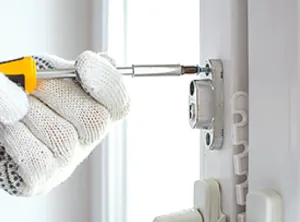
Installing a door will not take much time! The average installation speed is 1 — 1.5 hours.
Our plastic windows serve customers for decades
Author: Arman Kusainov, Chief Engineer for translucent structures and entrance groups
Plastic entrance doors Astana: which one to choose so you don't freeze in winter and don't overpay for heating in summer?
Metal doors are a common solution, but they have a serious drawback: the metal freezes, condensation forms on it, and then frost. Plastic entrance doors are an alternative that causes a lot of controversy. Some consider them unreliable, others — the only right choice for Astana's climate. Let's figure out where the truth is.
Why a plastic entrance door is not just a 'door made from a window'
Many mistakenly believe that a plastic entrance door is the same as a balcony structure, only larger. This is not true. A balcony door is not designed for intensive use and outdoor loads. An entrance group made of PVC is a completely different class of products. It uses a reinforced profile, stronger reinforcement, and special hardware that can withstand hundreds of openings per day. The entrance group plastic doors for a private house must work as a complex engineering system, not just close an opening.
Evolution of entrance groups: from solid metal sheets to smart systems
To understand the value, you need to look back. About fifteen years ago, the choice of entrance doors in Astana was limited to two options: a homemade metal structure made of sheet iron or an expensive imported one.
Metal-plastic doors for the street in those years were simple: a welded frame, sheathed with metal, inside – felt or mineral wool. The main problem is 'cold bridges'. Metal is an excellent conductor of heat. In winter, the handle froze, and a strip of frost appeared along the perimeter. Condensation formed inside, which over time led to corrosion. Wooden ones were warmer but required constant maintenance: painting, moisture treatment, protection from cracking. In our climate with sharp temperature changes, the wood 'breathed' and lost its geometry.
There were attempts to combine materials: a metal door with wooden cladding or so-called 'thermo-doors' with a break in the metal circuit. But such solutions were either very expensive or did not solve the problem comprehensively. The situation changed when multi-chamber PVC profile systems adapted for outdoor installation entered the market. They offered an elegant solution: a material that itself conducts heat poorly, plus engineering solutions for breaking cold zones.
A structure that withstands impact: what a plastic entrance door is made of
To understand what to pay attention to when choosing, you need to understand the structure. This opening is not just a profile and glass. It is a system where every element must be reinforced.
Profile
For exterior plastic doors, a multi-chamber profile with a thickness of 70 to 82 mm is used. The more chambers and the wider the profile, the better the thermal insulation. Pay attention to the profile class. Class A is a profile with an outer wall thickness of 3 mm. It is designed for high loads. The PVC entrance group for a private house must be installed only from class A profile.
Reinforcement
This is a steel insert inside the plastic profile. The reinforcement must be closed (forming a rectangular contour) and have a metal thickness of at least 1,5 mm. It is the reinforcement that provides rigidity and allows reliable fastening of locks and hinges.
Double-glazed window
A double-chamber package with an energy-saving coating is optimal. One of the chambers can be filled with argon — this further reduces heat loss. If it faces directly onto the street (not into a vestibule), I recommend using multifunctional glass. It reflects heat back into the room in winter and does not let excess heat in during summer.
Sandwich panel
This is a multi-layer structure made of plastic with insulation (most often polyurethane foam). In terms of thermal insulation, a sandwich panel surpasses a standard double-glazed window but deprives it of natural light. The optimal solution is a combined panel, where the upper part with glass lets in light, and the lower blind part provides maximum thermal insulation.
Key components to pay attention to
Locks and hinges are the 'Achilles heel'. For an outdoor plastic door, the same requirements apply as for a metal one.
Lock
A multi-point lock is mandatory. When the key is turned, the bolts extend at several points (usually 3–5) along the entire perimeter. This is not only protection against break-ins but also an even pressing of the leaf against the seal, which eliminates drafts. The best option is two independent locks: a lever lock and a cylinder lock. The cylinder must be protected by an armored plate.
Hinges
For a heavy outdoor door, at least three hinges are needed. They must be reinforced, with bearings that ensure smooth movement. Modern hinges have 3D adjustment — this allows you to set the leaf perfectly level even after the house settles. An entrance door for the street must be equipped with hidden hinges, inaccessible for cutting from the outside.
Expert advice from Arman Kusainov, Chief Engineer of translucent structures and entrance groups: When choosing a lock, pay attention to the bolt material. They should be steel, with anti-removal elements. Cheap locks with brass or aluminum bolts in our climate quickly fail due to temperature deformations. I also recommend installing a door closer.
Comparison table: glass types
| Glass type | Features | What it is suitable for |
| Tempered | Strength 5–7 times higher than usual. When shattered, it breaks into safe fragments. | Basic option for any entrance door. Provides safety and impact resistance. |
| Triplex (laminated) | Two or more panes of glass bonded with a polymer film. Withstands strong impacts, does not shatter. | Maximum burglary protection. Recommended for doors in cottages. |
| Multifunctional | Coating that reflects heat in winter and infrared radiation in summer. | Optimal choice for Astana. Reduces heat loss in winter and prevents overheating in summer. |
| Matte | Opaque, with a rough surface. Can be full or patterned. | For doors facing a busy street. Provides privacy while maintaining light transmission. |
Cost: what the price consists of
The price is formed from many factors. There is no 'average' price — each structure is individual.
Profile system. Products from different manufacturers (Rehau, Veka, KBE, Brusbox) differ in price. German brands are traditionally more expensive but offer proven quality and warranty.
Dimensions and configuration. The larger the door, the more expensive it is. Double-leaf and tilt-and-turn designs significantly increase the cost due to higher material consumption and complex hardware.
Fittings. This is the most variable parameter. Locks from Roto, Siegenia, Maco are more expensive but ensure reliability and smooth operation. Saving on fittings is the main mistake. Hinges and locks work under constant load, and their failure will require complex repairs.
Glazing unit. An energy-saving double-glazed unit with argon and triplex costs more than a standard single-chamber one, but the difference pays off in 2–3 heating seasons.
Installation. High-quality installation using professional foam, joint waterproofing, and proper fastening is no less than 15–20% of the cost. Saving on installation often leads to distortions, drafts, and door failure.
Expert advice from Arman Kusainov, Chief Engineer of translucent structures and entrance groups: When calculating the budget, allocate funds for a high-quality threshold with a thermal break. This is a non-obvious but critically important element. Significant heat loss occurs through a regular aluminum threshold. A threshold with a thermal insert solves this problem. I also recommend installing a ventilation valve. A sealed passage can create a 'locked volume' effect, and the valve will provide natural supply ventilation without opening the sash.
Specification table: selection by parameters
| Parameter | Recommendation for Astana | Explanation |
| Profile depth | 70–82 mm | The larger, the higher the thermal insulation. For permanent residence — from 70 mm. |
| Number of chambers in the profile | 5–6 | Multi-chamber design is the foundation of energy efficiency. |
| Reinforcement | Closed, 1,5–2 mm | Provides rigidity and burglary resistance. |
| Double-glazed window | Double-chamber, with i-glass and argon | Optimal balance of thermal insulation and light transmission. |
| Number of hinges | 3 | Even load distribution on heavy panels. |
| Lock type | Multi-point locking, 2 independent locks | Burglary protection and uniform clamping around the perimeter. |
Common mistakes in selection and operation
Over the years of work, I have repeatedly encountered situations where customers were disappointed with plastic entrance doors, but the reason was not the material itself, but errors in selection or installation.
Mistake 1: Installing a balcony door as an entrance door. This is the most common and costly mistake. A balcony door does not have the necessary reinforcement, has weaker hinges, and the lock is not designed for locking from the outside.
Mistake 2: Saving on hardware. Cheap locks and hinges quickly fail under load. Repair or replacement of hardware often costs more than the price difference at purchase.
Error 3: Ignoring the thermal break in the threshold. Even the warmest door will freeze if the threshold is made of ordinary aluminum without a thermal insert. This is a weak point through which up to 15% of heat is lost.
Mistake 4: Installation at the wrong time of year. Installation at sub-zero temperatures requires the use of special winter foam and strict adherence to technology. If these conditions are not met, the installation quality will be low.
Expert advice from Arman Kusainov, Chief Engineer for translucent structures and entrance groups: One of the most frequent questions: 'Why does condensation appear in winter?' In 90%% of cases, it is not a door problem, but a ventilation problem. A sealed plastic door to the outside does not let air through, and humidity from the room condenses on the coldest surface. The solution is a supply valve in the door or on the wall. If you notice condensation, first check the ventilation.
Final recommendations
Plastic doors entrance group is a technologically advanced and practical solution for private homes in Astana. They provide a high level of thermal insulation, require no complex maintenance, and can be adapted to any architectural task.
When choosing, I recommend paying attention to three key points: profile depth (at least 70 mm), type of reinforcement (closed, at least 1,5 mm), and hardware quality (proven brands). Do not skimp on installation — proper installation with hydro- and vapor barrier of joints will determine the durability of the structure.
If you are unsure whether to choose metal or plastic, evaluate your priorities. If thermal insulation and no maintenance hassle are paramount, plastic will be the best choice. If you are strict about burglary resistance and are willing to accept possible freezing, you can consider reinforced metal-plastic exterior doors with thermal break.
In any case, the decision should be balanced. Contact professionals who will take measurements, consider the features of your home, and offer a design that optimally matches your tasks and budget.
honest reviews from our clients


