

8 reasons to contact us
and be confident in the result


Installation work takes 2-3 hours
How does the window installation process go from start to finish?

We will make an accurate calculation based on your dimensions and help you decide on the profile and configuration
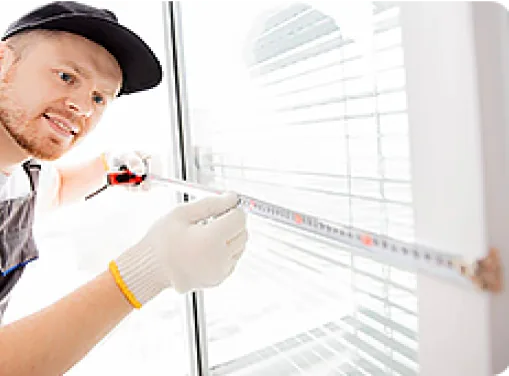
We consider all features of the installation location: presence of skew or quarters, wall material, and other parameters that affect installation quality
You can sign the contract either on-site or upon arrival at our office
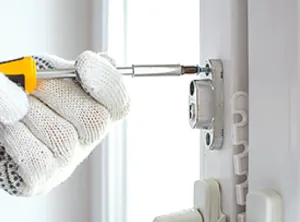
Installing windows won't take much time! Average installation speed – 1 — 1.5 hours.
Our plastic windows serve customers for decades
Author: Alan Sultanov, Lead Engineer-Technologist for High-Security Glazing Projects
Impact-resistant double-glazed windows in Astana: how to choose protection that works
Alan Sultanov. I have been designing and installing glazing security systems for 15 years. Behind me are hundreds of projects in Astana and its suburbs: from private cottages to commercial display windows requiring maximum protection. In this article, I will talk about what really works in our climatic and criminogenic conditions, not about marketing myths.
When it comes to home security, we usually think of alarms, cameras, or metal doors. But there is one vulnerable spot that often goes unnoticed — the windows. In Astana, the issue of glazing is particularly acute. Here, there is a specific climate with hurricane winds and hail, and a high rate of break-ins specifically through window structures in the private sector.
A standard double-glazed window is broken with one kick or a heavy object. Impact-resistant double-glazed windows solve this problem at the level of material physics. As an engineer, I often see the same mistake: people choose protection blindly, focusing only on price. Let's figure out what is actually hidden behind the terms 'vandal-resistant double-glazed window' and 'impact-resistant double-glazed windows', and which option will truly protect your property.
What is a impact-resistant glass unit and how does it work
An impact-resistant glass unit is not just thick glass, but a multi-layer structure where the key role is played by the inner layer, which holds fragments and absorbs impact energy.
Many believe that if the glass is thick, it automatically becomes safe. This is a misconception. Ordinary tempered glass is indeed stronger than regular glass, but when the strength limit is exceeded, it shatters into thousands of small fragments. Impact-resistant glass units work on a different principle.
The design is based on triplex technology. This is several sheets of glass glued together with a special polymer film (PVB or EVA). It is the film that does the main work. Upon impact, the glass may crack, but the fragments remain on the film. The structure continues to perform a barrier function — it cannot be pushed through or knocked out on the first try.
In Astana, where strong winds lift heavy objects into the air and spring hail can reach the size of a chicken egg, such a design becomes not just an option, but a necessity.
Main burglar resistance classes
- P1A–P4A: Basic level. Against vandalism and attempts to break in using physical force (kicks, punches, light objects).
- P5A–P6A: Withstands impacts from heavy objects (sledgehammer, crowbar, large stones).
- P7A–P8A: Highest level for civilian objects. Comparable to the characteristics of armored glazing units.
For a private house in Astana, class P5A or P6A is considered optimal. This is enough to stop an intruder trying to kick out the window with a foot or a crowbar. When choosing impact-resistant glass units, it is important to demand a test certificate, not just believe the seller's words.
Expert advice: Ask to see not the glass certificate, but the test report. Many companies purchase but assemble packages on ordinary equipment with technology violations. In this case, the properties are lost already at the assembly stage. In my practice, there was a case when "bulletproof glass" broke during installation due to internal stress because the assemblers did not account for material compatibility.
Comparison: impact-resistant double-glazed unit vs standard glazing
To understand the difference, you need to look at the numbers. Below is a comparison table based on the actual characteristics of structures we test in laboratory conditions.
| Parameter | Standard double-glazed window (4-16-4) | Impact-resistant double-glazed unit (triplex 6+6) |
| Impact resistance | Up to 30 J (broken by a stone 0,5 kg from a height of 2 m) | More than 200 J (withstands repeated sledgehammer blows) |
| Hack time | 5–10 seconds | 5–10 minutes (using tools) |
| Sound insulation | 30–32 dB | 38–42 dB |
| Construction thickness | 24–32 mm | 36–50 mm |
| Energy efficiency | Basic | High (due to additional chambers) |
Data shows that the gain in security is achieved not just through thickness, but through a fundamentally different physics of destruction. Not just harder to break — even after structural damage, they cannot be quickly opened from the outside.
Price of the issue: how much will safety cost
Impact-resistant double-glazed windows: the cost of glazing consists of three components: the type of triplex, the complexity of installation, and on average is 60–80% higher.
The issue of cost concerns everyone. The price range on the Astana market is huge. I have seen offers from 15 000 to 150 000 tenge per square meter. The difference is due not to seller greed, but to actual characteristics.
Factors affecting the price
- Number of glass panes in triplex — the more there are, the higher the price.
- Film thickness — standard 0,38 mm and reinforced 0,76 mm, 1,14 mm.
- Glass type — regular float glass is cheaper than tempered or low-emissivity glass.
- Availability of additional features — energy saving, tinting, mirror coating.
The price of impact-resistant windows can be reduced by choosing a compromise option: triplex only on the lower part of the window (where it can be reached from outside). The upper fixed parts can be made of standard energy-saving glass. This approach saves up to 30% of the budget without losing real security.
Expert advice: What should you not skimp on? Hardware and installation. Ordinary hinges and handles simply cannot withstand such a load. After a year, the window will start to sag, gaps will appear, and the geometry will be compromised. Poor installation will negate all protective properties — an intruder would only need to dismantle the window along with the frame. Always demand reinforced hardware and installation using anchor plates, not just mounting foam.
Technical aspects: how to read the marking and not make a mistake
The specification must indicate not only the presence of triplex but also the formula and type of film used.
When you are given a commercial offer, do not hesitate to delve into the technical details. A professional supplier is always ready to explain them. Here is what to pay attention to.
The formula is written approximately like this: 6Triplex(PVB0.76Ar–14. This means:
- 6Triplex — triplex of two glasses each 3 mm thick (total 6 mm) with 0,76 mm film
- 14Ar — spacer frame 14 mm wide, filled with argon (inert gas for improved thermal insulation)
- 6 — inner glass thickness 6 mm
Data table: scenario compliance
| Class according to EN 356 | Impact energy (J) | Usage scenario | Recommended objects |
| P1A – P2A | 40–70 | Vandal protection (stones, bottles) | Offices above the 2-th floor |
| P3A – P4A | 70–120 | Burglary protection without tools | Private houses, 1-th floor |
| P5A – P6A | 120–220 | Burglary protection with tools | Cottages, shops, offices on the 1-th floor |
| P7A – P8A | 220–350 | Reinforced protection | Banks, jewelry stores |
For Astana with its strong winds, I always recommend laying down a class at least one higher than the standard situation requires. The wind can carry a heavy object with high kinetic energy, and what withstands a stone impact will not necessarily withstand an impact from a metal part flying with a wind gust of 25 m/s.
Installation: why 90% problems start not with the glass
Even the most expensive package will lose its properties if the installation is performed with violations and the hardware is not designed for the weight of the structure.
I participated in the inspection of over a hundred sites where protective glazing was installed. In 9 cases out of 10, the problems were related not to the glass, but to how it was installed.
Typical installation mistakes
- Using mounting foam as the main fastening
- Using standard hardware instead of reinforced
- Incorrect sash adjustment
- Lack of expansion gaps for thermal expansion
A heavy window requires anchor fastening to the load-bearing wall with a step of no more than 400 mm. The fittings must have increased load-bearing capacity. And the profile system must include special steel reinforcements.
Anti-vandal glazing units, when properly installed, last 20–30 years without losing properties. When improperly installed, problems begin already in the first year of operation.
Expert advice: How to control installation? Ask the installers for the fastening diagram before work begins. The number of anchor plates must be clearly specified. After installation, check that the window opens and closes without effort, and that there are no through gaps around the frame perimeter. And be sure to keep the hidden work certificate — it is your main document in case of a warranty claim.
honest reviews from our clients


