

8 reasons to contact us
and be confident in the result


Installation work takes 2-3 hours
How does the window installation process go from start to finish?

We will make an accurate calculation based on your dimensions and help you decide on the profile and configuration
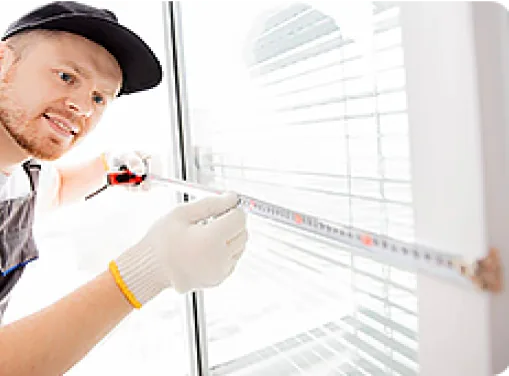
We consider all features of the installation location: presence of skew or quarters, wall material, and other parameters that affect installation quality
You can sign the contract either on-site or upon arrival at our office
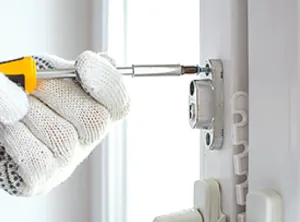
Installing windows won't take much time! Average installation speed – 1 — 1.5 hours.
Our plastic windows serve customers for decades
Energy-saving double-glazed windows Astana: how one detail changes everything
Author: Arman Nazarbayev, chief engineer-technologist for window systems with 12- years of experience in the climatic conditions of northern Kazakhstan
How desperate must you be to replace windows in Astana? It's minus 35 outside, the wind is blowing through your apartment, and the heating bill makes your heart skip a beat. Or vice versa — in summer it's +40, the air conditioner is working overtime, but the coolness disappears faster than kumis at Nauryz.
A familiar situation. I went through this myself when I first started working as a technologist. Back then, we thought the problem was only in the profile. Install a thicker one — and that's it. But clients came back with the same complaints. It turned out the key to comfort in Astana lies much deeper. And now I will tell you why ordinary windows are money down the drain, and how to actually keep it.
The modern solution came from a simple engineering thought: if air moves and transfers heat, it must be stopped. Or replaced. Thus, two pillars of energy efficiency emerged: low-emissivity glass and inert gas.
What is low-emissivity coating and why you should look at it
Imagine you poured tea into a thermos. The inner flask of the thermos is coated with a thin layer of silver, which reflects heat back into the drink. Low-emissivity glass works on the same principle. A microscopic layer of silver or metal oxide is applied to its surface. This layer is transparent to visible light but reflects long-wave thermal radiation back into the room.
The main compromise of such glass is that for high energy efficiency, you have to accept some loss of light transmission. Regular glass transmits about 90% of light. An energy-saving window transmits about 80-85%. The difference is noticeable when compared directly, but in practice the eye quickly gets used to it. In return, you get a completely different level of heat retention.
In Astana, where there is already little sun in winter, this point can become a stumbling block for some. But I always ask the client a counter question: what is more important to you — 5% of additional light or 30-40% of retained heat? The answer, as a rule, is obvious when the heating bill arrives.
Why argon inside is not just marketing
A double-glazed unit with energy-saving glass works many times more efficiently if the chambers contain not air but an inert gas. Argon is most often used. It is heavier than air and more viscous. Its molecules move slower, which reduces convection inside the chamber.
But there is an important technical nuance here. If assembled not hermetically, the argon will escape within a year or two, and you will be left with ordinary glass. I have seen many such examples. The problem is not in the technology, but in the quality of assembly. A good one with argon should last at least 10 years without gas loss.
Comparison: single-chamber vs double-chamber energy-saving double-glazed window
Characteristic | Single-chamber double-glazed unit with energy-saving glass | Double-chamber energy-saving double-glazed unit |
Structure | 2 panes, 1 air/gas chamber | 3 panes, 2 chambers (gas or air) |
Thermal resistance (R) | 0,7–0,9 m²·°C/W | 0,9–1,2 m²·°C/W |
Weight | Light, about 20–25 kg/m² | Heavy, about 35–40 kg/m² |
Light transmittance | High, 80–85% | Average, 70–75% |
Cost | Below | Higher by 30–50% |
Optimal application | Glazing of balconies, loggias, south side, apartments in 'warm' houses | Corner apartments, private houses, premises with high sound insulation requirements |
When choosing energy-efficient glazing for maximum heat retention, we inevitably sacrifice light transmission and increase the load on fittings and hinges. For an old house with less reliable walls, a heavy package can be a risky solution. It will simply bend the sash, leading to sealing problems.
When a single-chamber unit wins
The flip side of the high energy efficiency of a double-chamber unit is the increased demands on installation quality and hardware. Mistakes here are costly.
The main secret is to use the formula: low-emissivity glass (i-glass) + argon + spacer frame made of warm material. Then you get a product that outperforms a regular double-chamber package in its characteristics, but costs less.
Expert advice from Arman Nazarbayev, chief engineer-technologist:
"The most common mistake when ordering windows in Astana is trying to save money by leaving the budget for an expensive profile. It's like buying an expensive jacket but forgetting to wear a sweater. It looks nice, but you freeze in winter. The profile is the frame, and the double-glazed window is the heart of the window. It determines how much you pay for heating. Don't skimp on the heart."
Evolution of glazing: from eternal cold to full control
15 Years ago, when I first entered this field, the market was different. Everyone was chasing the profile. The thicker, the better. 70--millimeter systems appeared, then 80--millimeter ones. People thought this would save them from the Astana frosts.
There were also dead-end technologies. They showed fantastic thermal insulation figures but were fragile, expensive, and extremely difficult to install. One wrong press — and the window turned into a set of broken glass. In the conditions of a developing city, with dust, vibrations, and constant rush, this proved unviable.
A modern solution — to buy energy-saving double-glazed windows — elegantly solved all these problems. It does not require complicating the structure. It is the same standard package, but with the right materials inside. The technology has become accessible, reliable, and understandable. Today I can confidently say: the problem of cold windows in Astana has been solved technologically. All that remains is to apply it correctly.
How installation can ruin even the most expensive double-glazed window
I will give you one case from practice. A client in the residential complex "Altyn Orda" ordered premium windows with argon and a warm edge spacer. Everything top-notch. But the installation was entrusted to a crew that worked according to old Soviet standards. They placed the window in the installation gap, foamed it, and covered it with trim. That was it.
Result? A month later, the client complained about a draft. I went to the site. The window was perfect. But the cold was coming not through the frame, but through the wall-profile joint. The foam froze, creating a cold bridge. Ultimately, the whole point of energy-efficient glass was nullified.
I tell this example to everyone. Because it's useless to install super glass if it's installed haphazardly. Installation is 40% of success. A good installer must understand what the 'dew point' inside the wall is, how to properly vapor barrier the seam so that moisture does not condense inside the structure.
Energy-saving glazing unit: how to decipher the formula and calculate the benefit
Many buyers get lost in the specifications. This starts already at the selection stage. What is 'i-glass', how does it differ from 'k-glass', why is a plastic spacer frame needed instead of an aluminum one?
Let's break this down into simple components. A good energy-efficient double-glazed window for Astana must consist of three mandatory elements:
- Low-emissivity glass (i-glass) that reflects heat back into the room.
- Inert gas (argon) inside the chamber, which slows down heat transfer.
- Warm spacer frame (stainless steel or plastic) that does not create a cold bridge along the perimeter.
When you see a low cost for an energy-saving double-glazed unit, the price of which seems suspiciously attractive, most likely, there is either no argon or an ordinary aluminum frame is installed. This is a marketing ploy, not real energy efficiency.
Glazing unit element
Glazing unit element | Standard solution (economy) | Energy-efficient solution (result) |
Glass | Standard float glass | Low-emissivity i-glass with silver coating |
Gas in the chamber | Air | Argon (Ar) with a concentration of 90% and above |
Spacer frame | Aluminum (strong cold bridge) | Warm Edge — made of stainless steel or polymer |
Result | High heat loss coefficient, condensation at the edges | Minimal heat loss, cleanliness and dryness |
Expert advice from Arman Nazarbayev, chief engineer-technologist:
'If you are offered energy-saving windows at the price of regular ones, this is a reason to think. A real glazing unit with argon cannot cost pennies. Ask to see the glass before assembly. Real i-glass has a slight greenish or bluish tint at the edge. If you see completely transparent glass — it is ordinary float glass. The difference is obvious.'
Real math: Is an energy-saving double-glazed window worth it?
Most often I am asked: 'Arman, I understand that this is good. But how much will I save on this? Will the price difference pay off?'
Let's calculate using the example of a typical two-bedroom apartment in Astana with an area of 60 square meters. The glazing area is about 10 square meters.
Standard double-glazed energy-saving windows price (4-10-4-10-4) will cost approximately 40-50 thousand tenge. Similar single-chamber units with argon and a warm edge spacer will be about 25-30 percent more expensive. For the entire apartment, the difference will be around 50-70 thousand tenge.
But here is what changes in operation. A standard window loses about 60-80 W per square meter of heat with a temperature difference of 50 degrees between inside and outside. An energy-saving unit (single-chamber with i-glass and argon) loses only 25-30 W/m². The difference is 30-50 W per square. On 10 squares of glazing, that is 300-500 W of continuous heat loss.
And this is only direct savings on heating. You can also add to this:
- No costs for combating condensation and mold.
- Reduced load on the air conditioner in summer (energy-saving glass also works in reverse, reflecting solar heat outward).
- Increased service life of fittings and seals due to a more stable temperature regime.
The flip side of high energy efficiency is the need for quality ventilation. When PVC windows cease to be the main source of air inflow, the apartment can become stuffy. This is not a problem, but a feature that is solved by installing supply valves. I always warn clients about this. This is the price you pay for airtightness and warmth. But believe me, it is a pleasant price.
honest reviews from our clients


