

8 reasons to contact us
and be confident in the result


Installation work takes 2-3 hours
How does the window installation process go from start to finish?

We will make an accurate calculation based on your dimensions and help you decide on the profile and configuration
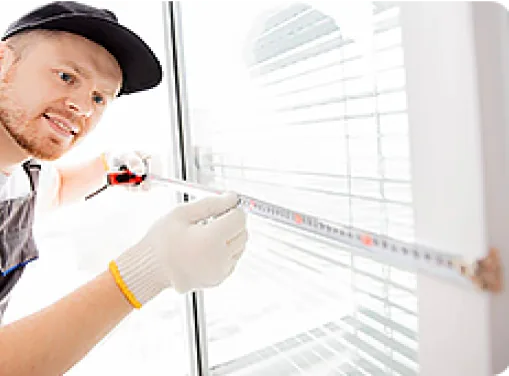
We consider all features of the installation location: presence of skew or quarters, wall material, and other parameters that affect installation quality
You can sign the contract either on-site or upon arrival at our office
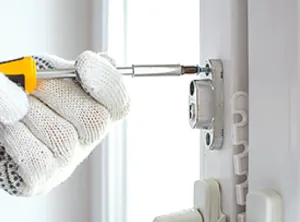
Installing windows won't take much time! Average installation speed – 1 — 1.5 hours.
Our plastic windows serve customers for decades
Multifunctional double-glazed windows in Astana: "all-in-one" technology for a climate with two faces
Author: Arman Nurakhmetov, Lead Engineer-Technologist for translucent structures
Imagine a defense that works on two fronts simultaneously. On one side — arctic cold, chilling to the bone at minus thirty-five. On the other — scorching sun, heating the room to a greenhouse state even with the air conditioner running. Multifunctional glazing units are the only solution that fights on two fronts and wins both battles.
In Astana, where the difference between winter and summer temperatures reaches seventy degrees, this issue becomes not a matter of comfort, but a matter of economic feasibility and health. Let's figure out how this technology works, why it appeared right now, and what compromises have to be made when choosing a true 'all in one'.
Why this is needed in Astana: numbers that speak for themselves
For a resident of Astana, the issue of choosing a glass unit is not a matter of aesthetics, but a matter of direct money. Let's calculate.
Winter period.
A frame with simple glass has a heat transfer coefficient of about 0,5 m²·°C/W, with argon in the chamber and a warm spacer frame raises this figure to 0,75–0,85. The difference in heat loss is about 40%. For an apartment with an area of 60 m² with typical glazing of 12 m², heating savings per season reach 35–45 thousand tenge.
Summer period.
In Astana in July, the sun creates a load of up to 900 W/m² on a vertical surface. A regular double-glazed window lets in up to 85% of this heat. A multifunctional one — no more than 40%. An air conditioner operating at full capacity in the middle of the day consumes 1,5–2,5 kWh. With window installation, the load on the cooling system is reduced by 50–60%. Over three summer months, electricity savings range from 20 to 30 thousand tenge.
Expert advice from Arman Nurakhmetov, leading process engineer for translucent structures: 'A mistake I see constantly: clients install double-glazed windows only on the sunny side, leaving ordinary ones on the north side. This disrupts the hydro-thermal balance of the apartment. The temperature difference between the glass on different sides of the building creates internal convection and negates half the effect. Either all windows are multifunctional, or leave the old ones.'
Evolution of glazing: from ordinary glass to 'smart' coating
Twenty to thirty years ago, there was only one type of window on the Astana market with ordinary glass. They performed exactly one function: separating the room from the street. Energy efficiency issues were not a concern back then — gas was cheap, and the climate seemed a given that people put up with.
In the early 2000-s, the first energy-saving glasses with hard (i-coating) and soft (k-coating) appeared. This was a breakthrough: it became warmer in winter. But in summer, the problem of overheating worsened — energy-saving glass acts like a thermos, not releasing heat, but also not reflecting solar energy from outside.
In parallel, tinted sun-protective glasses were developed. They solved the problem of summer overheating, but in winter they turned into black holes, absorbing the already scarce winter sun. The room was both dark and cold at the same time.
Alternative technologies — electrochromic glass with variable transparency — remain in the commercial real estate and premium housing segment. Their price is 5–7 times higher, and their service life is limited to 10–15 years due to degradation of the liquid crystal layer.
Technology comparison: what to replace with what
Characteristic | Standard double-glazed unit (4-10-4) | Energy-saving (i-glass) | Multifunctional |
Heat transfer coefficient (U), W/m²·K | 1,3–1,5 | 0,9–1,1 | 0,6–0,8 |
Solar factor (g), % | 78–85 | 65–75 | 30–45 |
Light transmittance, % | 85–90 | 80–85 | 70–78 |
Winter operation | weak | excellent | good |
Summer protection | no | weak | excellent |
Relative price | 1 | 1,3–1,5 | 1,7–2,0 |
Choosing a multifunctional double-glazed unit for year-round protection, we inevitably sacrifice up to 15% of natural light compared to regular glass. This is the downside of the technology: each functional coating reduces transparency.
Three main questions asked by homeowners in Astana
Does the price difference pay off?
Yes, and quite quickly. The difference between a high-quality double-glazed energy-saving window and a multifunctional one with argon in Astana is about 12–18 thousand tenge per square meter of a complete window. For a typical two-bedroom apartment, this adds 100–150 thousand tenge to the final glazing cost. The average annual savings on utility bills amount to 45–70 thousand tenge. The payback period is 2–3 years.
Can multifunctional double-glazed windows be installed in wooden windows?
It is possible, but with limitations. Wooden window systems have a different profile geometry and often a thickness limitation. The optimal thickness is 36–44 mm (two chambers of 12–16 mm each with argon). Not all wooden profiles can accept due to loss of structural rigidity.
Compromise: if wooden frames are already installed and are not planned to be replaced, you can install a single-chamber double-glazed unit with a thickness of 24–28 mm. There will be an effect, but 30–40% weaker than in a full-fledged double-chamber structure.
What happens if you install a multifunctional double-glazed unit on the north side?
Many believe that on the north side, a multifunctional window is not needed — there is almost no sun there anyway. This is a mistake. On the north side in winter, there is no active solar heating, so the internal energy-saving coating works at full capacity. And in summer, even on the north side, there is an overheating problem: the northern sun is not as intense, but it shines longer (up to 10–12 hours a day in June). A multifunctional double-glazed unit on the north side reduces this passive overheating.
Expert advice from Arman Nurakhmetov, leading process engineer for translucent structures: 'We had a project in the residential complex "Astana-Park" — a corner apartment. The customer insisted on these windows, only on the west side. A year later, they were redone. The temperature difference of the glass on different sides created such a convection flow that in winter, rooms with northern windows were 3–4 degrees colder. The technology must work systematically, not pointwise.'
Warm edge spacer: why the edge of a double-glazed window is as important as the center
The spacer frame separating the glass panes is made of aluminum. Aluminum is an excellent heat conductor. In frost -30°C, the edge freezes, creating a cold zone 5–8 cm wide along the perimeter. This is where condensation most often occurs, and in severe frosts, frost.
A warm edge spacer frame is made of polymer materials with low thermal conductivity or of stainless steel with a thermal insert. Its use reduces heat loss at the edge by 30–40% and virtually eliminates the risk of freezing and condensation.
Argon or air: what you cannot save on
Argon is an inert gas that is heavier than air. Filling the inter-glass space with argon reduces heat transfer through the gas gap, as the heavy argon molecules move slower and transfer less heat by convection.
In a double-glazed unit, replacing air with argon in one chamber improves thermal insulation by 7–9%, and in two chambers by 12–15%. For Astana, where the winter temperature difference between outside and inside reaches 50–60 degrees, these percentages are critical.
The main compromise of argon filling is that to improve thermal insulation, we accept risks to durability. Over time (after 8–12 years), part of the argon inevitably escapes through the micropores of the seals. But by this time, the service life is already approaching the standard, and the difference in comfort over these years many times outweighs the gas loss at the end of operation.
Comparison of multifunctional glazing units from different manufacturers
Parameter | Product A (European brand) | Product B (Russian brand) | Product B (local assembly) |
Type of coating | Pyrolytic (hard coating) | Magnetron (soft) | Magnetron (soft) |
Number of coating layers | 7 | 5 | 5 |
Light transmittance, % | 78 | 74 | 72 |
Solar factor (g) | 0,38 | 0,41 | 0,44 |
Heat transfer coefficient (U), W/m²·K | 0,62 | 0,68 | 0,71 |
Warranty on coating properties retention | 15 years | 10 years | 5–7 years |
Price per m² of double-glazed window | from 18 000 ₸ | from 13 500 ₸ | from 10 000 ₸ |
By choosing a more affordable locally assembled glazing unit today to save on the budget, we inevitably sacrifice the stability of performance over a horizon of 7–10 years. The downside of a low price is faster aging and a shorter period of maintaining the stated parameters.
How to check if you are really dealing with a multifunctional double-glazed window
In the Astana market, there are attempts to pass off either ordinary multifunctional double-glazed units or tinted sun-protection ones as multifunctional. Three verification methods:
- Visual inspection. This glass has a slight gray-bluish or gray-greenish tint when viewed from outside at an angle. From inside, it looks like regular clear glass without noticeable tinting.
- Lighter test. Hold a lit lighter to the surface of the glass (outside). If the glass has a coating, you will see a double reflection of the flame — one from the glass surface, the second from the coating layer. On regular glass, the reflection will be single.
- Documentation check. The specification must clearly state the formula (s, S, Solar, Multi). If the documents simply say 'energy-saving' or 'heat-saving' but promise sun protection, this is a sign of substitution.
Expert advice from Arman Nurakhmetov, leading process engineer for translucent structures: 'The most common scam scheme: a single-chamber multifunctional glass unit with coating is brought to the site, but it is documented as a double-chamber unit with argon. They pocket the price difference. You can check by the end: two chambers are visible to the naked eye. If you see one spacer frame, it is a single-chamber unit. They should not be installed in residential premises in Astana at all, multifunctional or not — it freezes through.'
honest reviews from our clients


