

Author: Arman Kusainov, chief engineer for installation of translucent structures
Installation of window flashings in Astana: how to protect walls from dampness
Many apartment owners in Astana mistakenly perceive the exterior finishing of a window as a purely decorative element, forgetting about the harsh steppe winds and sharp temperature swings, which in one season can turn an unprotected installation joint into dust. When moisture freely penetrates under the frame, it destroys the wall structure and causes mold on the windowsills, so the primary task for preserving the durability of the renovation is professional installation of flashings.
What is the real purpose of window opening protection?
The main function of a drip cap is the organized drainage of precipitation from the lower part of the window unit. In the conditions of our region, where winter frosts are followed by sudden thaws, water trapped in the cracks expands when freezing, literally tearing the facade. To prevent such damage, engineers use special schemes for joining the metal to the external slope. To avoid this, proper installation of window drip caps is necessary, creating a reliable barrier against melting snow and rain. Even a slight deviation from the technology will cause moisture to find its way to the insulation.
To achieve maximum effect, we use special diffusion tapes. They work on the membrane principle: they remove excess moisture from inside the room but completely block its access from the street. If this stage is ignored, even the most expensive profile will not save you from drafts, since window flashings, installed without sealing the joints, quickly lose their protective properties.
Technology evolution: from concrete to polymers
Another 15 years ago in Astana, concrete canopies were poured everywhere under windows. This solution was extremely short-lived: concrete absorbed moisture, cracked, and required annual repainting. Later, galvanized steel appeared, which made a terrible noise during rain. Today, the quality standard is multi-layer steel with a polymer coating. Such window sill installation provides not only protection but also acoustic comfort in the apartment.
Comparison of modern materials
Material | Advantages | Compromises |
Aluminum | Eternal, not afraid of corrosion | High price, difficulty of trimming |
Galvanized steel | Accessibility, durability | Risk of corrosion when the layer is damaged |
Plastic (PVC) | Maximum silence | Fragility in severe frost |
It is important to understand: when choosing aluminum for durability, we consciously go for higher costs. And when choosing steel, you need to be prepared that the price for installing the drip cap will be lower, but special care will be required during transportation to avoid scratching the protective layer.
Technical nuances and cost of work
In Astana, the cost of services is often tied to the dimensions of the product and the complexity of access to the facade. Since the wind load in our city is enormous, we recommend using metal with a thickness of at least 0.5 mm. People often look for where the installation of flashings is cheaper, a price that won't hit the budget, but forget that this cost should include quality sealants and fasteners. Excessive frugality on consumables usually results in the need for a complete rework of the joints after a couple of years. We strongly advise choosing a contractor who provides a transparent estimate with the brands of the materials used.
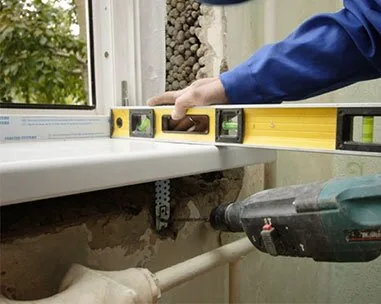
If the structure is fixed only with mounting foam, after a couple of years under the influence of ultraviolet radiation it will turn to dust. A strong gust of wind will simply tear off the sheet metal, so reliable installation of plastic drips or metal analogues necessarily involves mechanical fastening with self-tapping screws to the support profile at intervals of no more than 30 cm.
Expert advice from Arman Kusainov: 'The downside of rigid fastening is thermal expansion. Leave gaps of 2-3 mm on each side so that the metal does not warp in the heat. This is a small detail that doubles the life of the facade.'
Nuances of sealing and facade protection
Special attention should be paid to the end caps. Without them, water flows down the edges of the drip cap directly onto the side slopes, causing them to get wet and the plaster to peel off. Proper installation of the window drip cap implies that the edges of the product either go into the wall groove or are tightly closed with overlays using weather-resistant silicone.
3 facts that installers don't talk about
- Resonance: On high floors in Astana, flashings without a vibration-damping substrate can vibrate so strongly that the sound transmits to the entire wall.
- Slope: The minimum angle should be 10°. If made smaller, water will stagnate, turning into an ice crust in winter.
- Overhang: The drip cap should protrude beyond the edge of the wall by 40–50 mm, otherwise dirty streaks on the facade are guaranteed.
For those who value an integrated approach, the most sought-after solution is professional installation of window drip caps, as specialists take into account the wind rose and the features of specific residential complexes in our city. We use only proven materials that withstand extreme temperature changes from -40 °C to +40 °C. Our company guarantees that after completion of work, your windows will be reliably protected from any weather whims.
8 reasons to contact us
and be confident in the result


honest reviews from our clients


