Blog · 9 min read
How to choose
double glazing

A practical guide to double glazing types, chamber count, glass options and what matters beyond the price tag when buying for an apartment in Almaty.
OKNA PLAST makes PVC windows with double glazing in its own workshop in Almaty and installs them with its own crews. For an apartment, start with the chamber count and glass thickness your profile can hold, then match the glazing to noise, sun and winter cold. We fix the price in the contract before signing.
Which glazing actually suits an apartment in Almaty
An apartment here asks three things of its glazing at once — a noisy street outside, a hot summer and a cold winter. What follows is how the choice shifts from one space to another and from facade to facade.
What changes when your windows face a noisy street
A noisy facade is solved by glass thickness and asymmetry first, not by adding a third pane — a 6 mm and 4 mm pair breaks the sound wave better than two identical panes. Traffic noise arrives mostly as low-frequency rumble, and a mismatched pair of sheets interrupts it more effectively than a symmetric build of the same total weight. The spacer frame matters too: a warm-edge spacer keeps the edge zone from becoming the weak point. Profile series carry their own acoustic ceiling — Salamander bluEvolution reaches up to 48 dB, KBE 76 mm up to 46 dB — but the glass assembly itself is what the street hits first. Ask the engineer to check which side the traffic noise comes from before choosing the profile; the same package behaves differently depending on the way the sashes open toward the street.
Glazing choices for kitchen, bedroom and balcony
We plan the glazing space by space — the bedroom takes the quietest package, the kitchen takes one that handles humidity and sun, and the balcony block takes a two-chamber 32 mm build. In the bedroom the priority is the acoustic pair described above, with i-glass facing the interior to hold winter heat. The kitchen gains more from a coating that reflects summer sun and from ventilation that works, because steam and cooking grease load the seals harder than temperature does. For the balcony block we specify the 32 mm two-chamber assembly that fits our 60 mm frame lines, and on OKNA PLAST jobs the engineer weighs it against the opening before signing. A balcony block carries more pane area per opening than a standard window, so the weight lands on the hinges; check the hardware rating before choosing the widest package.
Single or double chamber glazing and what the numbers mean
The chamber count is the first decision most buyers make, and it is also where generic advice fails — the right answer depends on the profile width and on how cold the winter gets.
How many chambers an Almaty apartment really needs
For an apartment in Almaty a two-chamber unit is the working standard because it holds warmth through winter and cuts street noise better than a single-chamber version of the same width. Two air gaps between three panes act as separate barriers to heat escaping outward and to sound pushing in from the street. Single or double chamber glazing is not a matter of taste: the second air layer adds roughly 8 mm of depth, so the frame has to carry it, and most 60 mm profiles accept a 32 mm assembly without changes. A one-gap package still makes sense on a balcony or a utility room, where heat loss matters less; spending on an extra layer there buys little comfort. The deciding factor is the mounting width of the frame you already have or plan to order, not the label on the sample.
A side-by-side look at the common glazing options
| Package | Chambers | Thickness | Best for |
|---|---|---|---|
| Basic | 1 | 24 mm | Balcony, utility rooms |
| Standard | 2 | 32 mm | Bedroom, living room |
| Coated | 2 | 32–40 mm | Cold-side facades |
| Wide | 2 | up to 52 mm | Noisy streets, large glazing |
Choosing double glazing by heat noise and coatings
Coatings and gas fills are where the sales talk gets thickest, so knowing how to choose double glazing means separating what changes the physics of the window from what only changes the invoice.
What i-glass and argon actually do
A low-emissivity coating reflects heat back into the room and argon slows the transfer through the gap, so together they lift winter comfort without adding a third pane. The coating is a microscopic metallic film on one surface, and it works on long-wave radiation rather than on draughts. Argon is denser than air, so it moves less inside the sealed cavity and conducts less warmth across it. Both belong to the wider family of types of double glazing that differ by what sits between the sheets rather than by the number of chambers. In our experience the pair is worth specifying on north-facing rooms and wherever the radiator sits under the sill. The coating only pays off on the room side of the inner sheet; fitted the wrong way round, the effect disappears and nobody notices until the first cold snap.
Which glazing types cut noise the most
We match the unit to the profile behind it — Salamander bluEvolution reaches up to 48 dB, KBE 76 up to 46 dB, and WDS 6S up to 36 dB, so the quietest result comes from pairing the right glass with the right frame. Each 10 dB step is perceived as roughly halving loudness, which makes the gap between 48 and 36 dB far from cosmetic. On a noisy avenue the frame usually decides the outcome, because a 60 mm system with four chambers leaks sound at the joints long before the panes give up. A high dB rating on paper means little if the surround is thin; sound finds the weakest part of the assembly, and that is usually the profile, not the panes. Sealed unit formulas, airtightness and internal dew point are specified in GOST 24866.
Matching glazing thickness to your profile
Knowing how to choose double glazing starts with the groove it sits in, so the frame width sets a hard ceiling on how thick the unit can be before it stops fitting.
Reading the profile width before you pick the glass
The mounting width of the frame — 60, 70, 76 or 80 mm — decides the maximum glazing thickness, so a two-chamber package will not drop into a narrow rebate built for a single one. A 60 mm line such as Galwin holds a unit up to 30 mm, while a 76 mm KBE or an 80 mm Rehau Geneo accepts packages of 46 to 52 mm. A double glazing comparison across widths shows the rebate depth, the sash and the number of sealing contours all shift with that width, which is why the same unit behaves differently in a slim frame and a deep one. If you are replacing only the panes in an existing frame, measure the rebate depth first — forcing a thicker package in leaves no room for the setting blocks, and the sash stops closing cleanly.
Profile series and the glazing they carry
| Profile series | Mounting width | Glazing it carries |
|---|---|---|
| Galwin | 60 mm | up to 30 mm |
| SMART | 60 mm | two-chamber 32 mm |
| Deceuninck Favorit | 71 mm | two-chamber |
| KBE 76 | 76 mm | two-chamber, up to 46 dB |
| Rehau Geneo | 80 mm | up to 52 mm |
From measurement to handover without surprises
The best glazing package still depends on the team that measures, builds and installs it, so the final decisions concern the company and the handover rather than the glass itself.
Why a maker with its own workshop changes the result
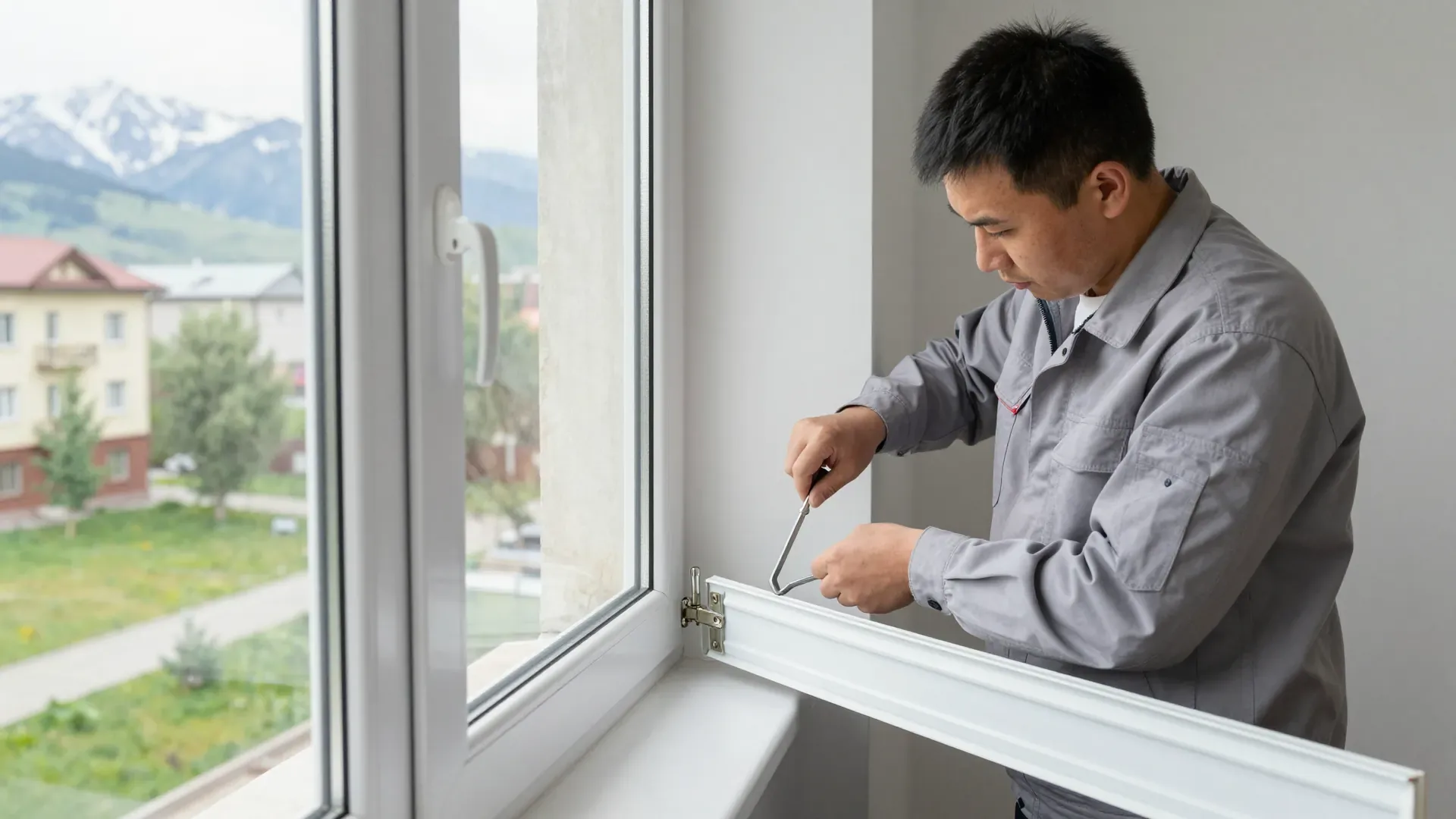
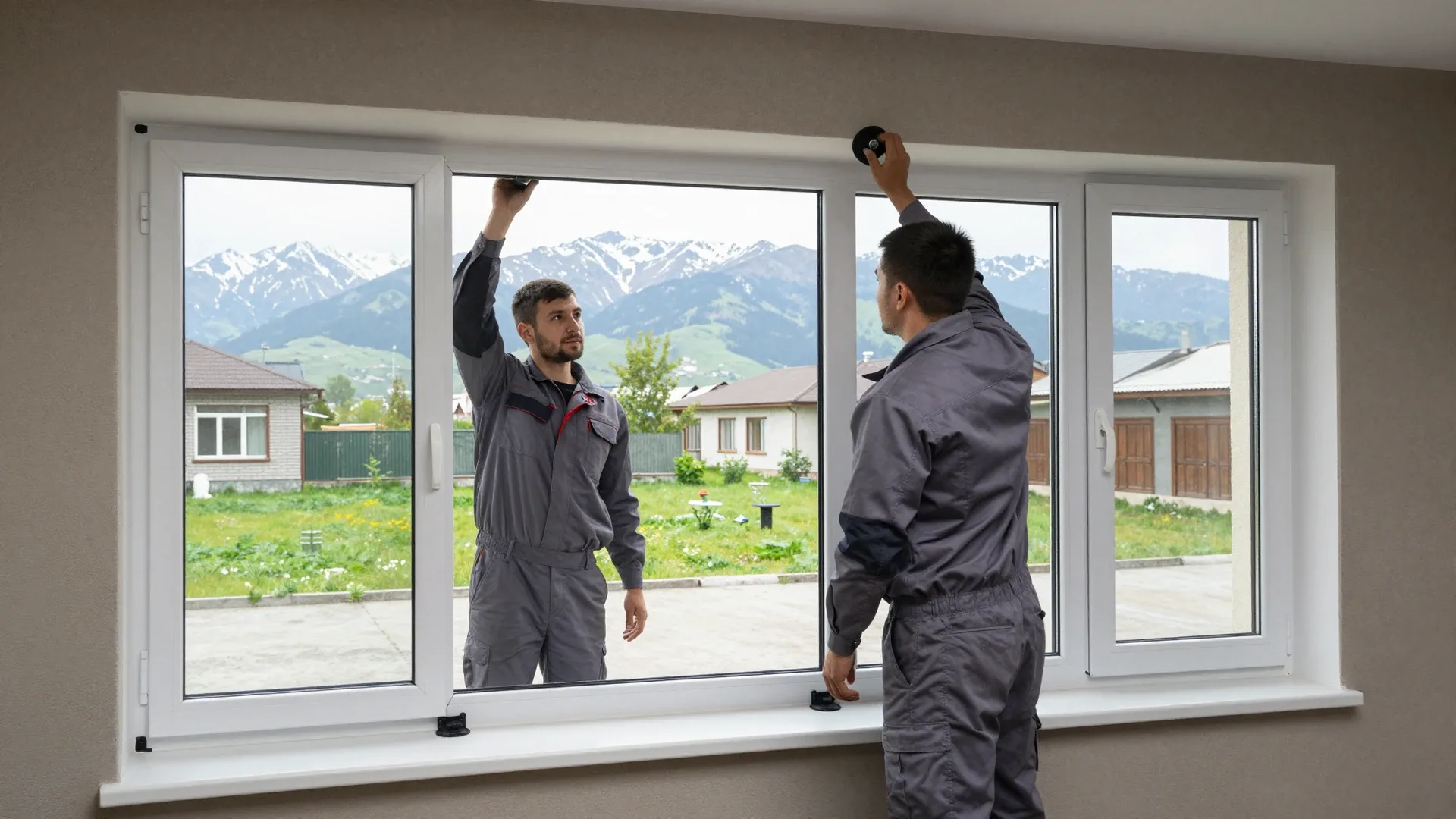
We assemble windows in our own workshop and install them with our own crews, so the double glazing for an apartment you pick at measurement is the one that arrives, and the price is fixed in the contract before signing. One team runs the whole chain: the engineer measures, the workshop cuts and seals the units, the crew mounts them per GOST with the region's seismicity in mind, and the sill, flashing and slope finish go in the same day. From contract to installation takes no more than two weeks, and a credit without an advance runs over 6, 12 or 24 months with early repayment free of penalty. A reseller forwards your order to a third-party workshop and a separate installer, and that split is where mismatched glazing and vague deadlines begin; asking who builds and who installs separates the two models fast.
What to check on handover and what the warranty covers
We hand over windows with a 10-year warranty on the units and 5 years on sills, slopes and flashings, and we keep servicing them afterwards — adjustment, gasket and handle replacement, glazing swaps. On the day of handover, run a finger along the frame perimeter and press the sash against the seal: a uniform compression line and a clear drainage path at the bottom mean the joint is closed properly. A fogged unit usually points to a failed seal or a poorly sealed joint at installation, not to the glass, so the perimeter and the drainage come first. Keep the contract sheet listing the profile series and the glazing build — it is what the warranty check refers to years later.
What matters more than price when picking a window unit
A few decisions matter more than the showroom price list when you pick glazing for an apartment. The short version below is what to carry with you into the conversation.
- Start with what the frame holds: match chamber count and pane thickness to the profile width, not to the widest package on the offer sheet.
- Match the unit to the room: the quietest build for the bedroom, humidity-tolerant panes in the kitchen, a two-chamber unit for the balcony.
- Treat coatings and gas as comfort tools: check that i-glass sits on the correct face and that argon fills are actually specified.
- Ask who builds and who installs: a maker with its own workshop and crews removes the handoff between factory and fitter.
- Inspect the perimeter and drainage at handover: keep warranty terms for units and for finishes as separate documents.