
Blog · 9 min read
Window adjustment
for winter

How winter and summer modes work on PVC window hardware, how to switch the sash yourself, and when it is better to call a technician.
Window adjustment for winter means tightening the window sash pressure so the seal closes firmly against the frame in cold, windy weather. In Almaty, with dust and sharp seasonal swings, most moving panels only need a quarter-turn of the locking cams. If air still leaks after that, the seal or the alignment is the real cause, not the mode.
What Window Adjustment for Winter and Summer Mode Actually Change in a Sash
The setting is not a thermostat: it changes how firmly the leaf presses its rubber seal against the frame. Understanding that mechanics first makes the winter summer window mode switch a deliberate action, not guesswork.
Why the Same Sash Needs Two Different Pressures
Winter mode pulls the leaf harder against the frame so the rubber seal compresses fully; summer mode releases that pressure so the seal can recover and the hardware wears more slowly. The adjustment lives on the cams — the eccentric pins on the leaf edge — that ride against the strike plates in the frame. Turning a cam moves its centre, and a few millimetres of offset translates into a measurable change in pressure along the whole perimeter. Across a 1,300 mm leaf that difference is enough to close a hairline gap at the bottom corner where wind load peaks. A seal that stays compressed for years loses its rebound, so the looser summer position is maintenance, not a downgrade.
What Happens If You Never Switch
Leaving it in summer mode through a windy winter lets cold air slip past a loosely seated seal, while keeping it clamped tight all summer flattens the seal and stiffens the cams. The gasket is the part that suffers first: rubber held at constant high compression stops springing back, and dust driven by dry gusts settles into the flattened groove. Cams that never move seize in their sockets, so the next adjustment needs force and risks stripping the slot. The damage is slow and invisible until the window starts whistling, so the switch is cheaper as prevention than as a repair.
Reading Your Sash Before You Touch Anything
Before reaching for a hex key, establish two things: which position the leaf sits in right now and whether it still holds air. Both checks take a few minutes and need no tools.
Finding the Mode From the Cam Position
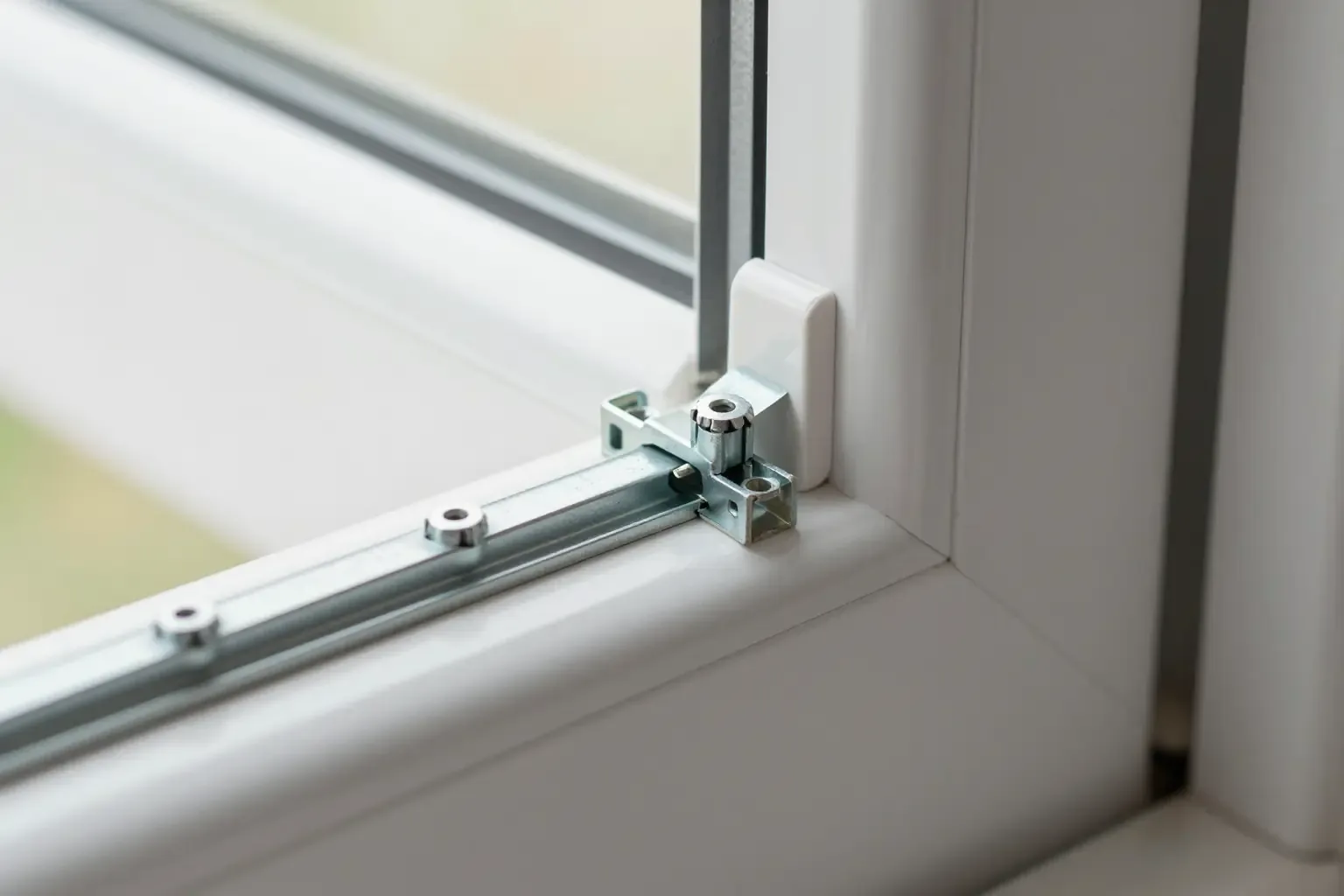
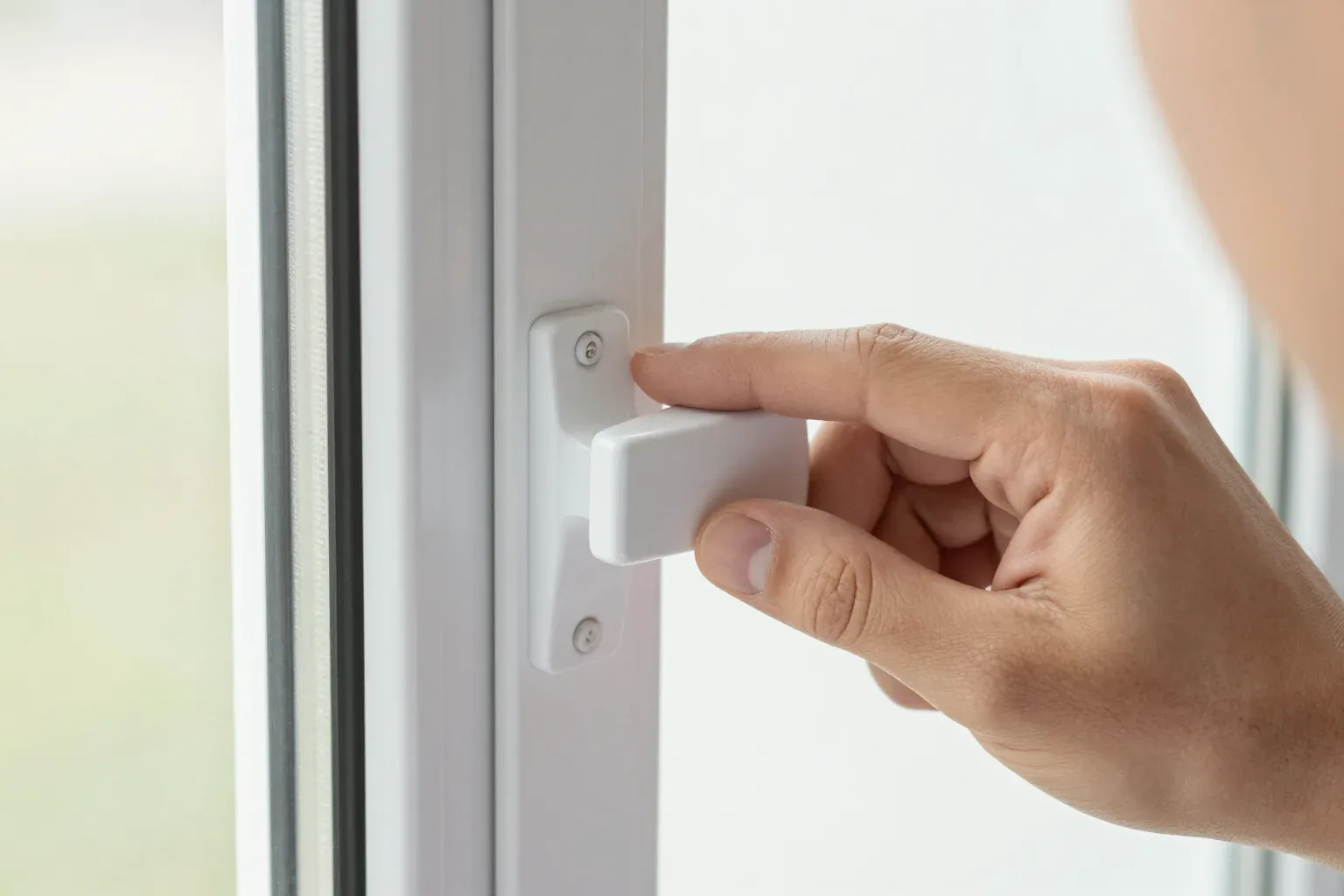
Look at the locking cams on the leaf edge: a mark or dot facing the room usually means summer, facing the frame means winter, and a cam turned halfway sits between the two. On most hardware the eccentric is a small cylinder that rotates with a 4 mm hex key, roughly a quarter turn between the end stops. Trade fittings differ — Roto, Maco and Siegenia mark the point in their own way, and some elements carry no dot at all, only a slot. A mechanism frozen mid-turn is the most common thing we find on panels that were never set after installation. Getting the seasonal setting right starts with reading these marks correctly. Markings differ between hardware brands, so confirm the setting with a paper test rather than trusting the dot alone.
The Paper Test That Shows Real Sash Pressure
We check the real grip by closing a sheet of paper in the leaf at several points around the frame; it should pull out with firm resistance and leave a light crease, not slide free. Work around the perimeter — handle side, hinge side, top and bottom — and keep the sheet narrow enough that the seal grips it along its full width. A single loose point at the top corner is the classic signature of a dropped leaf on worn hinges, not of a weak setting. Test at the corners and the middle separately, because a unit that grips at the handle but releases at the top corner is misaligned, not under-pressured. The MACO user guide describes checking gaskets with a sheet of paper and leaving cam pressure adjustment to a specialist.
Switching the Sash Yourself Step by Step
The physical switch takes a couple of minutes per window leaf. What matters is not force but care: knowing which pin to turn, how far, and when to stop before the hardware tells you it has had enough.
Tools and the Quarter-Turn Rule
- Allen key: a 4 mm hex key fits the cams on most tilt-and-turn hardware we install; a 3 mm key is too small and rounds the pin.
- How to switch the sash to winter: seat the key fully, then turn the cam a quarter-turn toward the frame — never a half or full rotation.
- The stop: each cam has a physical end point; our fitters stop at the first resistance instead of pushing past it.
- Seized cam: if the pin will not move at all, the mechanism is stuck or the panel sits under load — leave it and call a fitter.
- After the turn: close it and check the handle latches with normal effort, not a shove.
A Simple Table for Choosing the Setting
| Window location | Exposure | Suggested mode | What to watch |
|---|---|---|---|
| Living room, windward side | Strong wind, dust | Winter | Seal crease stays even |
| Bedroom, sheltered | Low wind | Summer until frost | No draught at corners |
| Balcony block | Gusts | Winter early | The leaf closes without force |
| Kitchen, high humidity | Moisture | Summer, check seal | Condensation on frame |
When Draughts Are Not About the Mode
If air still moves through the frame after you switch the cams, the setting was never the problem. Two failures produce the same symptom, and telling them apart decides whether you adjust or replace.
A Hardened Seal Cannot Be Adjusted Back
When the rubber has gone hard and flat, no amount of extra pressure restores a tight rebate, and the fix is replacing the gasket rather than over-tightening the cams. EPDM and TPE loops lose elasticity from UV, dust and the sharp temperature swings between hot summers and cold winters here, so the material stops filling the rebate even when the leaf closes fully. Press a fingernail into the rubber; if it stays dented instead of springing back, the part is spent and a tighter mode only strains the hinges. A replacement gasket is swapped as a perimeter loop during a single visit, with the corners where it is welded checked as well. Running a winter cam setting against hardened rubber wears the hinge screws and pulls the leaf out of square within a season.
How a Dropped Sash Mimics Weak Pressure
A draught that runs down one side or one corner points to a dropped leaf, where the hinges need realigning, while an even draught all round points to weak window sash pressure from the cams. Wide openings carry real weight, and over years the lower hinge settles a millimetre or two, so the cam meets the striker off-centre and leaves a crescent opening that no winter position closes. Check the space between the moving frame and the fixed one with a torch in the dark; a wedge that widens toward the bottom is alignment, not mode. Realigning hinges is a fitter job with a hex key and a level, and on our installs the hardware carries its own warranty.
The Almaty Season Calendar and When to Call a Fitter
Local climate sets its own switching schedule, and window adjustment for winter is one job where the calendar matters more than the thermometer. Here is the calendar we follow and the checklist that tells you what to do yourself.
A Two-Switch Calendar for Windy, Dusty Conditions
In Almaty we set windows to winter mode as the autumn winds pick up and back to summer mode once the frost passes, because holding winter pressure through a hot dusty summer wears the gasket and cams faster. The city sits in a basin where spring brings grit and gusts for weeks, and a leaf clamped tight grinds that grit into the rubber on every close. The summer setting releases the pressure just enough to let the seal breathe and recover its shape. We watch the calendar rather than the thermometer: switch to winter when night temperatures settle near freezing, release after the last frost. Dust settles into a compressed gasket and acts like sandpaper each time the frame closes, so a spring release and a wipe-down stretch its life.
A Self or Service Checklist
- Free-turning cams: if every cam rotates a quarter turn without force, diy hardware adjustment is safe and takes minutes.
- Even draught: run the paper test along the whole perimeter; a consistent grip means the pressure is balanced.
- Seized cam or stiff handle: stop turning and book a fitter, since forcing the mechanism strips the cam slot.
- Dropped leaf: a corner that catches or rubs points to hinge wear, and realigning it yourself can crack the hinge plate.
- Hardened gasket: rubber that stays flat after release needs replacement, not more pressure.
What Our Service Covers After Installation
As a manufacturer with its own workshop and fitting crews, we handle seasonal adjustment, seal and handle replacement and glass unit swaps as part of our after-installation service, backed by a 10-year warranty on the windows. The service list runs to 13 items, and a personal manager keeps the history of your order so a fitter arrives already knowing the profile series and hardware set. Our fitters recognise the profile and fittings on sight, which shortens diagnosis to a single visit. When a gasket is past saving, replacement takes one visit; adjustment alone rarely fixes rubber that has lost its rebound.
How to adjust window pressure without mistakes
Seasonal adjustment is a small mechanical habit, not a repair. The points below summarise what to check and when to stop and call a fitter.
- Setting, not temperature: winter tightens the moving panel against the seal loop; summer eases it so the rubber recovers its shape.
- Test before you trust the cam: a paper strip at both corners and the middle reveals real tightness, while the cam marking alone can mislead on an older unit.
- A quarter-turn is enough: a 4 mm Allen key moves the cam one notch; forcing a seized trunnion strips the hardware and is the most common self-repair mistake.
- Read the draught pattern: an even leak points to the clamping force, a one-sided leak to a dropped leaf, and a hard flat seal needs replacement rather than another turn.
- Switch back in spring: winter settings held through the hot months compress the gasket permanently, so releasing it and wiping the rubber extends its life.