
Blog · 9 min read
Plastic window
care

A practical guide to washing frames, cleaning double glazing, lubricating hardware and keeping seals soft through Almaty's dusty summers and cold winters.
OKNA PLAST builds PVC windows in its own workshop and installs them with its own crews, so we know which parts wear first. Plastic window care comes down to four habits: wash the profile and glass with a mild agent, treat the seals with silicone, lubricate the hardware twice a year and keep the drainage channels clear.
How to care for plastic windows and what to keep off the frame
PVC is tough but not indestructible; the wrong cleaner dulls the surface and dries the seals. Plastic window care starts with mild products and regular attention to the rubber parts, so here is what to use and what to avoid.
Safe everyday agents for the profile and the glass unit
- Lukewarm water with dish soap: default for PVC and pane, applied with a soft microfiber cloth.
- Plain rinse: removes soap residue that attracts grime and leaves a grey film.
- Two microfiber cloths: one for frame, one for pane, so grit never scratches.
- A squeegee with fresh rubber blade: pulls moisture off in one pass, stopping streaks.
- pH-neutral cleaner for stubborn marks: lifts fingerprints and film without touching PVC or seal groove.
- A dry cloth at the end: wipe frame dry, since standing moisture in corners feeds mould.
Solvents, abrasives and alcohol wipes that damage PVC
- Acetone and nail polish remover: soften PVC skin, leaving a matte patch no polish restores.
- White spirit and paint thinners: strip the protective layer and migrate into the rubber gasket.
- Ammonia-based glass sprays: etch the pane edge and degrade the gasket where spray runs.
- Scouring powders and melamine sponges: cut grooves into the profile that trap grime and cannot be sanded out.
- Alcohol wipes: evaporate fast and pull plasticiser from the rubber, so it hardens and cracks.
How to wash sealed glass units without streaks or trapped moisture
Cleaning double glazing without streaks or trapped moisture We wipe the glass with a squeegee pulled top to bottom in one pass and a dry microfiber along the frame edge, removing the water line before it dries. On a 32 mm two-chamber unit the inner pane sits close to the rebate, so a cloth wrapped around a finger reaches the corners without pressing on the rubber. Work one sash at a time and keep the sill dry, since moisture running into the drainage slots carries grime down. On tilt-and-turn sashes, open the leaf to the ventilation position first for easier glass access. If mist appears between the panes, the sealed cavity has lost its desiccant and the unit needs replacing.
Seal maintenance and how to tell a tired gasket from a worn one
The rubber gasket keeps draughts and dust out and is the part owners neglect most. Twice-yearly seal maintenance costs less than replacement.
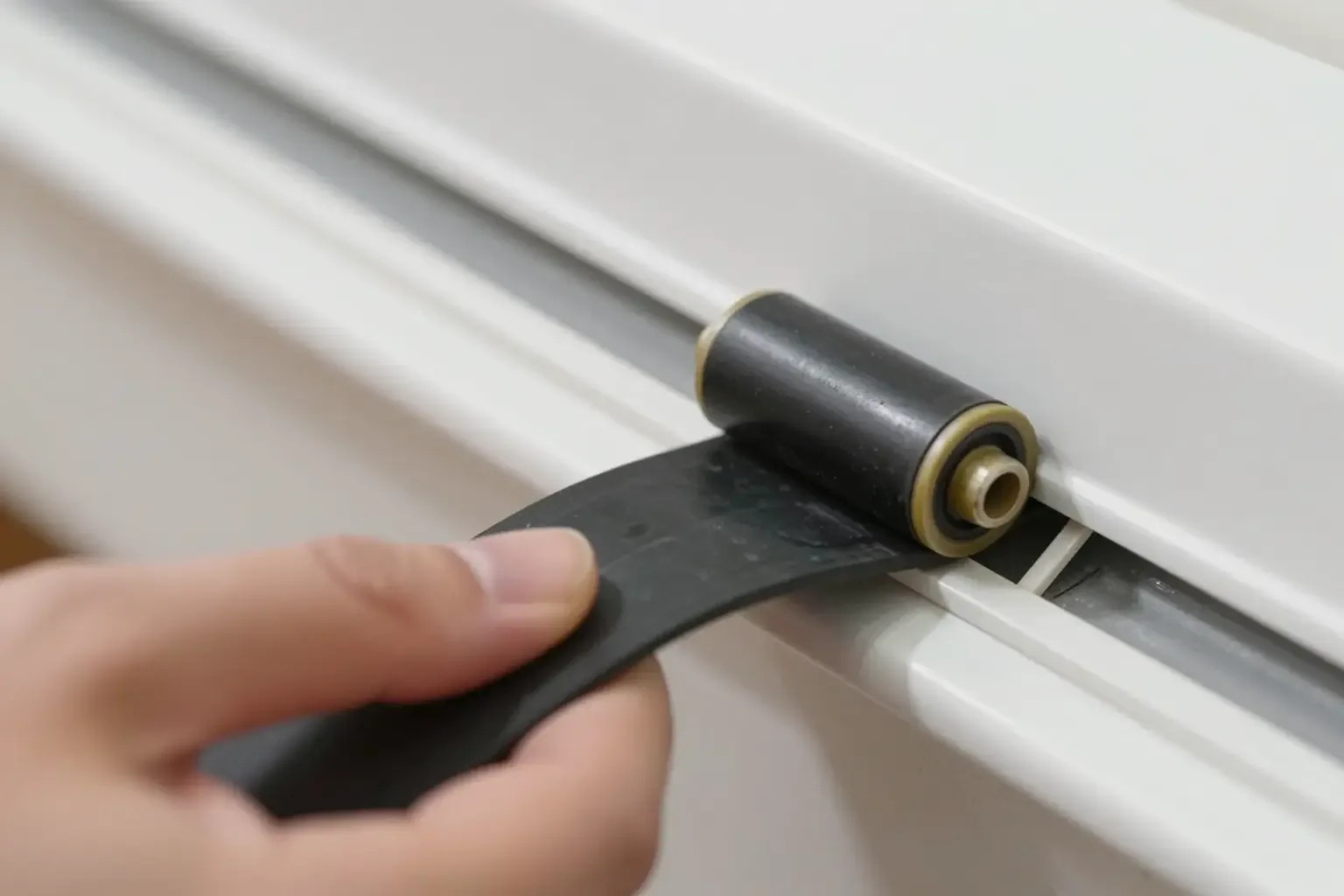
How to treat the gasket so it does not dry out and crack
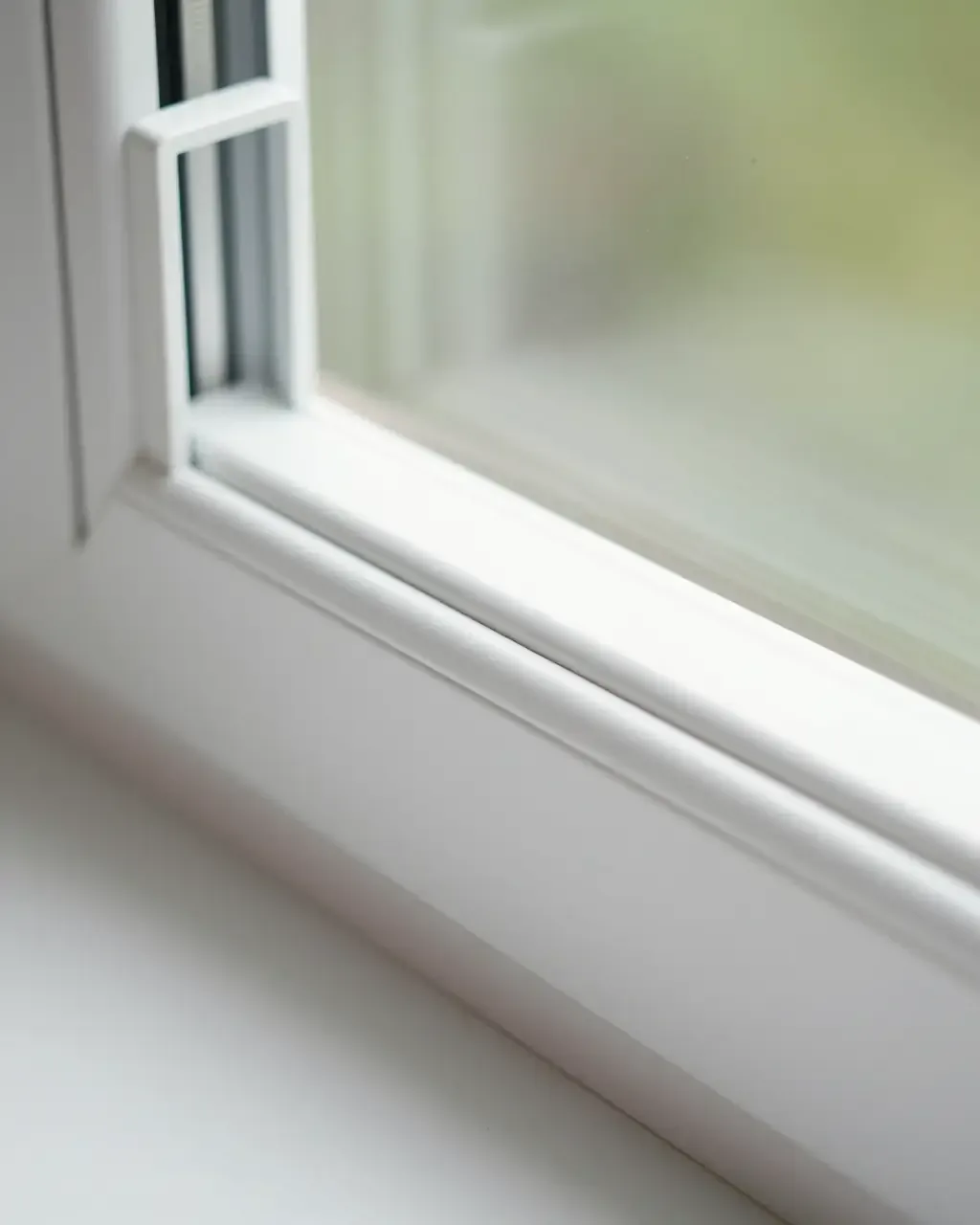
We wipe the gasket clean with a damp cloth, let it dry, then run a thin film of silicone grease along the full perimeter so the rubber stays supple through the dry Almaty summer. The black EPDM strip on our profiles sits in the rebate and compresses against the sash, and once it hardens it stops springing back after the window closes. Work along the whole length, including the corners and the bottom edge where dust settles fastest. Apply silicone sparingly and buff off the excess, because a thick layer collects grit that grinds into the material each time the window shuts. Lubrication and rubber care steps are set out in the MACO user guide.
Signs that the seal needs replacing rather than greasing
- Flattened profile: the strip no longer springs back after pressing, so the leaf closes without a soft cushion.
- Visible cracks: fine splits along the fold let air through even when the surface looks clean.
- Pulled from the groove: the gasket lifts at a corner or hinge side, no longer sitting in its channel.
- Paper test: a sheet closed in the leaf slides out freely, meaning contact is gone — consider seal replacement.
Seal condition by window part and what to check
| Contour | What to check | How often |
|---|---|---|
| Bottom edge | Dust film, water marks, flattening | 3 months |
| Hinge side | Cracks at the fold, contact | 6 months |
| Top edge | Sun hardening, gap to frame | 6 months |
| Frame rebate | Pulled corners, groove seating | 6 months |
Window hardware lubrication and adjusting the sash pressure yourself
Metal parts in hinges, cams and handles need lubrication to keep the sash gliding smoothly, and the same fittings let you tighten the seal yourself.
Which lubricant to use and how often to apply it
- Twice a year: grease hinges, locking cams and tilt mechanism before and after heating season.
- Thick hardware grease: lithium-based or universal window grease stays on pins, does not run in summer heat.
- Silicone spray: reaches tilt mechanism and internal rods through narrow gaps.
- No vegetable oil or WD-40: both attract dust and wash out factory lubricant, so joints grind dry.
- Full open-close cycle: after spraying, work the lever through a full turn so product spreads onto internal rods.
Tightening the sash pressure with an Allen key
- Check the gap: slide paper between sash and frame, close, pull — free movement means loose pressure.
- Find the cams: eccentric locking points sit on the sash edge near corners and handle side.
- Turn a quarter: insert a 4 mm Allen key, rotate the cam a quarter turn to increase gasket pressure.
- Retest the paper: close and pull after every quarter turn; stop when it drags but slides.
- Do not over-tighten: joints strain, the lever hardens, and the gasket flattens.
When a stiff or sagging sash means a service call
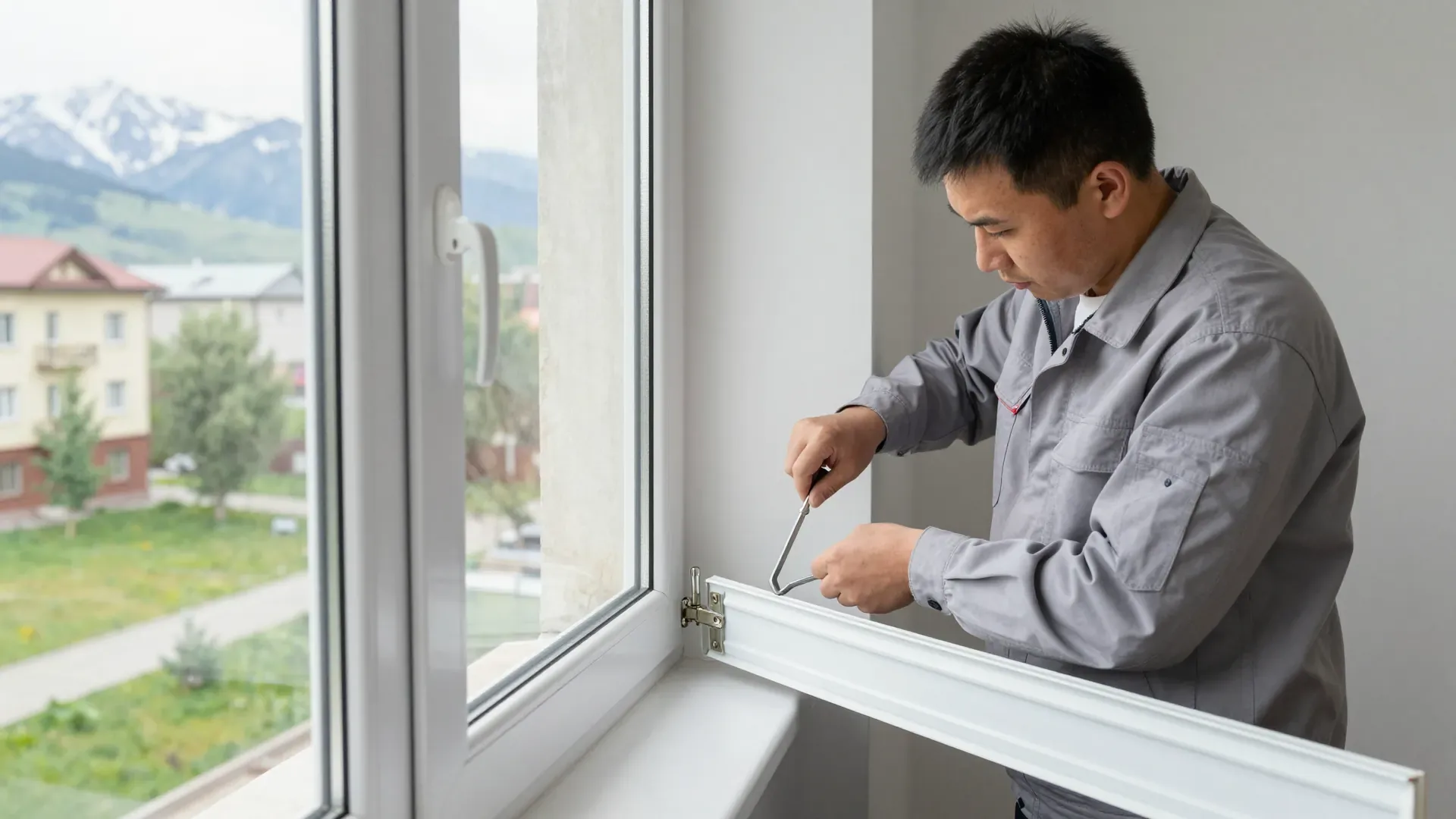
When the sash scrapes the frame, the handle turns but the window will not lock, or the corner drops, our service crew re-hangs and adjusts the window hardware rather than leaving you to force it. A dropped corner usually means a worn hinge arm or a screw pulled out of the reinforcement, and both need the leaf lifted off and reset. We cover fittings and handles under warranty and carry the full adjustment kit on the call, so the window is re-hung square in one visit. Forcing a dropped leaf bends the hinge arms further, so the small adjustment you avoid today turns into a replacement later.
Almaty climate, condensation and clearing the drainage channels
Almaty climate, condensation and clearing the drainage channels Dusty, dry summers and sharp winter temperature swings stress PVC seals and fill drainage channels, so both need attention.
Dust, dry air and the winter mode question
Dust, dry air and the winter mode question Summer dust settles into seal grooves and dry air hardens rubber, so wash the profile more often and switch hardware to winter mode only when the sash feels loose in the cold. Dust season runs May to September, and a fine grey film builds on the lower profile within two or three weeks of open windows — wipe it off before it works into the gasket line. Winter mode presses the leaf harder against the gasket, useful in a cold snap but wearing the seal faster if left on all year. On our Rehau Geneo and Deceuninck Favorit profiles the eccentrics sit behind a plastic cap on the hinge side, and a quarter turn is usually enough.
Why water appears on the glass and what it signals
- Room-side condensation: inner glass moisture first means loose sash pressure, not a failed unit.
- Blocked drainage channel: water stays inside the profile, showing as a damp sill patch.
- High indoor humidity: cooking, laundry and plants add moisture beyond ventilation removal.
- Cold bridge at the joint: a wet corner near the wall means opened foam or sill joint.
- Faulty glass unit: mist between panes that never clears is sealed-unit failure; wiping won't help.
Clearing the drainage slots and the seasonal checklist
- Locate the slots: rectangular openings sit on the outer face under each sash and on the sill near corners.
- Clear them: push a thin wire through each slot to remove dust and leaf debris.
- Flush with water: pour a cup into the channel and watch it drain outside.
- Check the caps: refit the covers so wind-blown dust stays out between cleanings.
- Repeat in autumn: clear again before cold so trapped water cannot freeze and stress the corner.
Where do-it-yourself care ends and OKNA PLAST service begins
Most routine work is within reach of an owner with a cloth and an Allen key; our service crew steps in once parts wear out or the frame has moved.
A simple care schedule by part and season
| Part | Task | How often |
|---|---|---|
| PVC profile | Wipe with mild soapy water | Every 2–3 months |
| Glass unit | Clean both faces | Every 2–3 months |
| Gasket | Wipe and treat with silicone grease | Twice a year |
| Hardware | Lubricate hinges and locking points | Twice a year |
| Drainage slots | Clear dust and debris | Before and after winter |
What you can fix yourself and what needs the service crew
- Washing: wipe profile and glazing with mild soapy water yourself.
- Greasing: silicone grease on hinges and locking points keeps them moving freely.
- Drainage: clear slots under the sash with a thin brush to prevent pooling.
- Light adjustment: a quarter turn on pressure cams with an Allen key restores a snug fit.
- Service crew: torn seal, broken handle, failed unit or dropped sash go to our team; after-installation service covers 13 tasks including seal, handle and unit replacement.
Why proper installation and a 10 year warranty matter for care
We build the windows in our own workshop and install them with our own crews to GOST standards with the local 9 point seismic factor in mind, backing the windows with a 10 year warranty and the sills, slopes and flashings with 5 years. A frame set level and square keeps the sash pressure even along the whole contour, so the hardware does not have to compensate for a tilt that was there from day one. In our practice, the units that come back for a second visit are almost always the ones where the seal was left to dry out. A well-installed window needs far less adjustment over its life, and checking that strip on schedule keeps it that way.
Which habits extend window service life
Long service life comes from routine, not from rescue. Five small habits cover almost everything a PVC window asks for across the years.
- Mild agent only: pH-neutral solution on a soft cloth lifts dust; solvents and abrasives eat into the surface.
- Silicone on the seals twice a year: a thin film keeps rubber elastic, so it does not dry out or crack.
- Hardware grease before and after the heating season: two applications keep locking points and hinges moving freely.
- Drainage slots cleared each spring and autumn: free channels carry condensate outside; a blocked slot sends water onto the sill.
- Know when to call a professional: a worn seal or sagging sash needs a replacement part, not more grease.