Blog · 9 min read
When to replace
double glazing

This guide explains how to tell a failed sealed unit from a window that only needs adjustment, and how to choose the right replacement glass unit for your home.
OKNA PLAST is a window manufacturer in Almaty with its own workshop and installation crews, so we diagnose the unit on site and tell you plainly whether it needs replacing. Fogging sealed inside the panes, a crack running from the edge or a failed spacer means a new unit; worn seals, handles and alignment are fixed by service.
How to tell surface condensation from fogging when you replace double glazing
Most people call both problems "foggy windows", but one is a ventilation issue and the other is a failed glazing pack. The difference decides whether you need service, a new glass unit, or a fix for cracked window glass.
Where the moisture actually sits
We check the moisture on site and the rule is simple — if you can wipe it off with a cloth, it is condensation on the room-side surface, and if it stays trapped between the panes, the sealed pack has failed. A double-glazed assembly is a closed structure: two or three panes held by an aluminium spacer, a primary butyl seal and a secondary polysulfide or thiokol seal, with molecular sieve granules inside the spacer absorbing residual moisture. Once that perimeter seal breaks, water vapour enters the cavity and reaches dew point on the cold pane, and no desiccant left inside can absorb it. A glazing pack that fogs between the panes will not clear with better ventilation, so drying the room and opening vents only helps the surface case; the trapped case is a one-way diagnosis.
Why surface condensation is not a glass fault
Surface condensation appears when warm humid indoor air meets a cold pane, so it points to room humidity, poor ventilation or a cold spot rather than a broken unit. Cooking, drying laundry indoors and a sealed plastic window with closed vents push indoor humidity up, and the inner pane drops below dew point on cold mornings. The glass itself is intact: the cavity stays clear, the spacer is dry, the seals hold. A single foggy window in an otherwise dry flat usually sits above a radiator that is switched off or beside a blocked vent, so fix the airflow before blaming the pane. Open the trickle vents, move furniture away from the sill and check that the rubber gasket still presses against the sash — a worn seal lets cold air through and creates exactly that local cold spot.
When a unit cannot be saved and replacement is the only option
Some faults are cosmetic and some are structural. Here is the line we draw on site between a glazing pack that can be serviced and one that has to come out.
The faults that mean a new unit
We replace the glazing once the seal has failed and moisture is trapped inside, if a crack starts at the edge or frame, or if the spacer and desiccant are damaged — none of these can be repaired from outside. Fogging inside double glazing is a one-way process: once the desiccant is saturated, the cavity stays wet for good. A crack that begins near the frame is worse than a chip in the middle, because the profile clamps the stress point and every expansion cycle pushes the fracture deeper. A bent or corroded spacer shows as a wavy line along the perimeter, and that is where the primary seal usually broke first. A crack that starts at the border grows with every temperature swing, so glazing that looks stable today can shatter in a cold snap; replacing it early avoids a sharp-edged failure.
Matching the fault to the fix
| Symptom | Where it shows | Decision |
|---|---|---|
| Moisture trapped between panes | inside the sealed cavity | replace glazing |
| Crack starting at edge or frame | glass surface | replace glazing |
| Damaged spacer or desiccant visible | along the perimeter | replace glazing |
| Worn seal, draught at sash | around the frame | service |
| Stiff handle or dropped sash | hardware and hinges | service |
What our service team can fix without touching the glass unit
Not every draught or stiff handle means a new glazing pack. Several faults live in the sash and hardware, and our service covers them without removing the glass.
Seals, handles and alignment
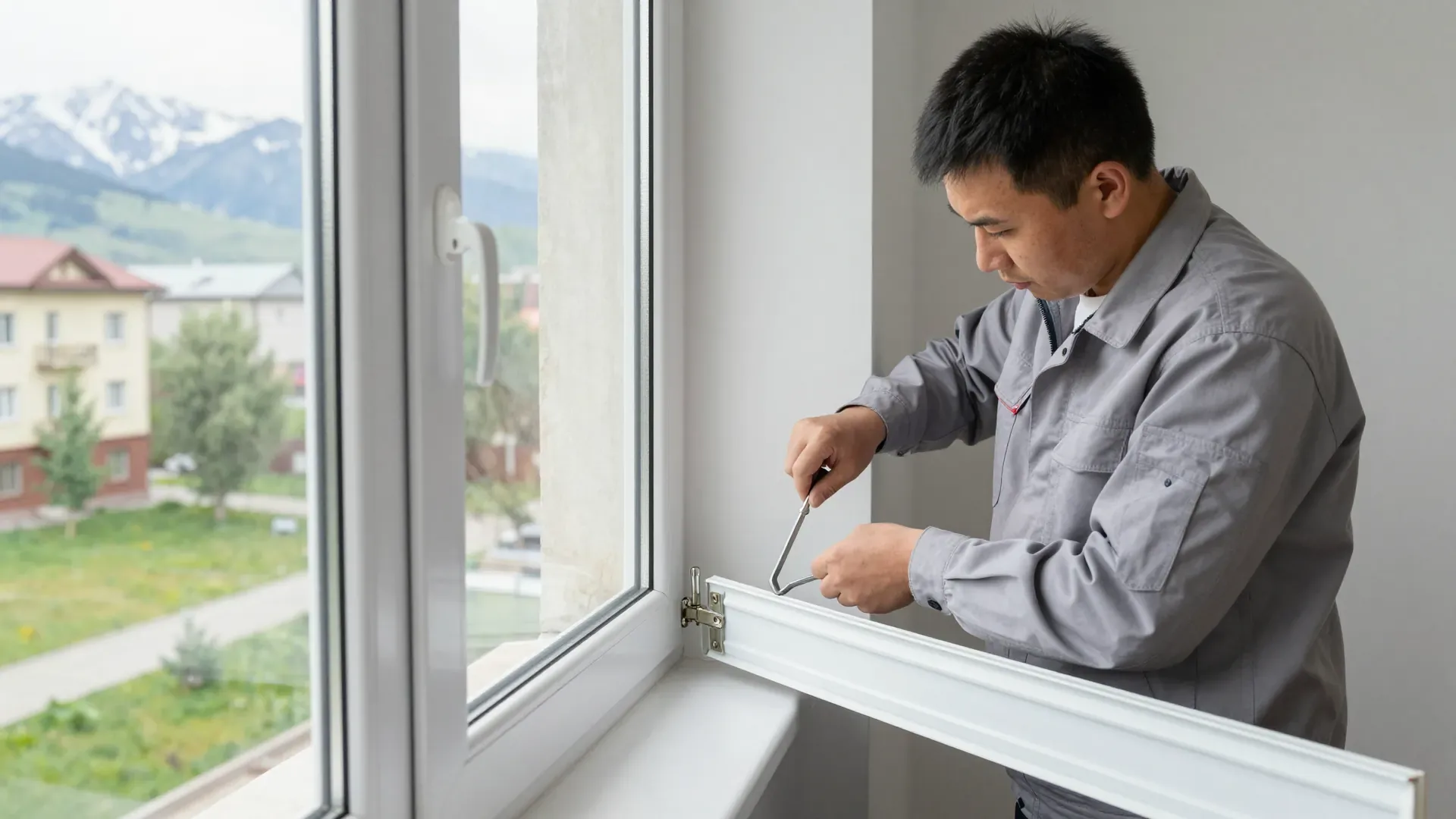
We handle 13 jobs after installation, including replacing the seal, swapping handles and adjusting a dropped sash, and none of these require new glazing. A worn EPDM gasket flattens over time, so the sash no longer presses evenly against the frame and cold air slips past the rebate. Hardware tells its own story: a handle that turns with effort or a leaf that catches on the sill usually points to hinge wear or a misaligned tilt-and-turn mechanism, not to the panel. When we adjust a dropped leaf, we work on the hinge plates and the corner drives, then verify the contact line along all four sides. A sash that has dropped a few millimetres lets in a draught that feels like a failed panel, so an alignment pass is the cheapest first step before anyone talks about replacement.
When service is the wrong call
Service is the wrong call when the fault sits inside the sealed cavity, because no amount of fresh gasket or hardware can dry out a panel that has already lost its barrier. The tell is a haze or water line between the panes rather than around them — condensation on the room-side glass wipes off, moisture trapped within does not. A failed perimeter barrier lets damp air into the argon gap, the desiccant saturates, and the fogging returns within weeks of any surface fix. At the survey we compare the glazing against the frame, test the contact line and look at the spacer bar before recommending any work, so the choice between repair or replace window rests on where the moisture actually sits.
Replacing just the glass unit while the frame and slopes stay in place
The biggest worry we hear is that swapping a sealed pack means tearing out the whole window. It does not — the frame, slopes and sill stay, and only the glazing itself is changed.
What comes out and what stays
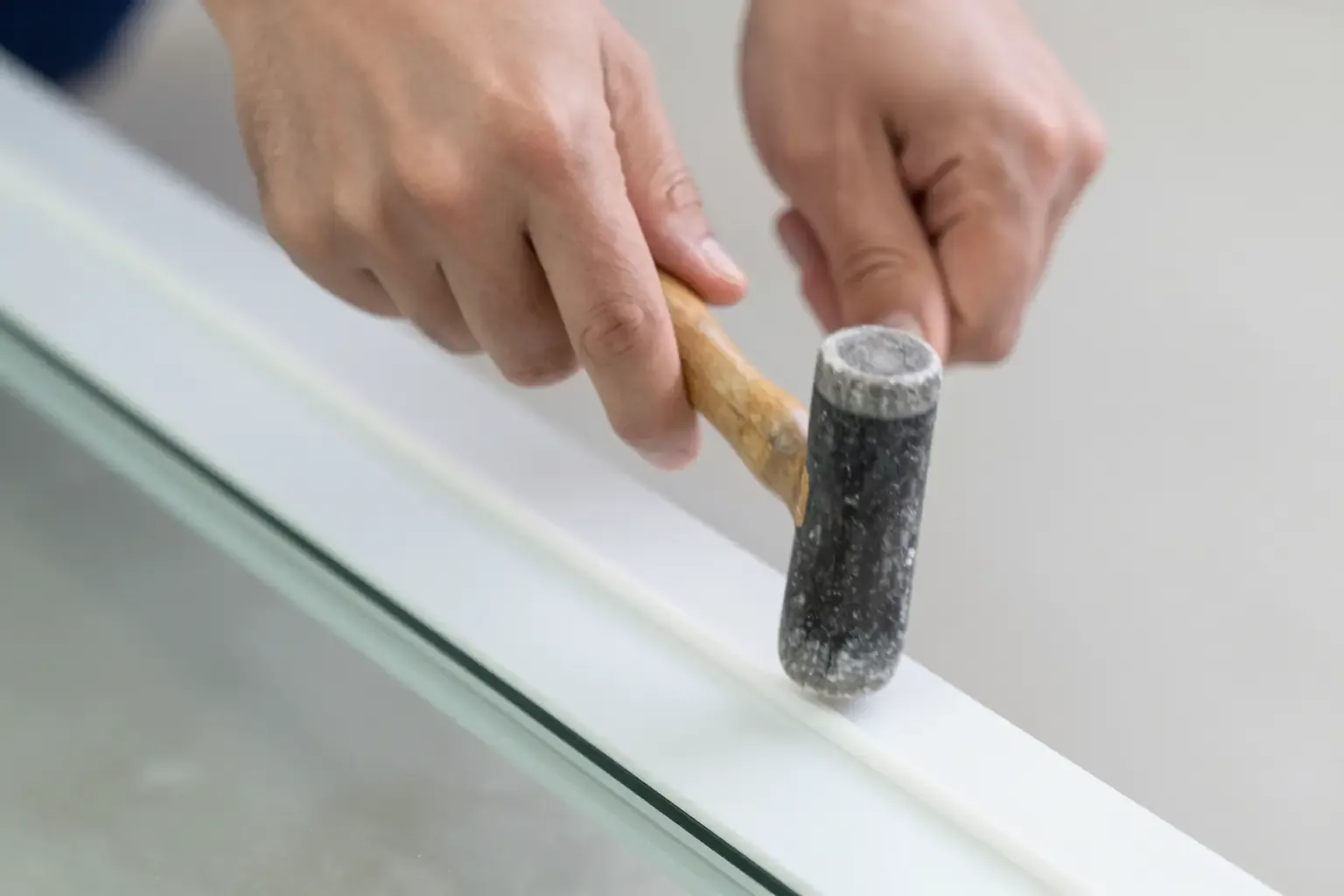
We unclip the glazing beads, lift out the old pack with a glass lifter and seat the new one, while the frame, slopes, sill and flashing stay exactly where they are. The beads are the only parts that come off — PVC or aluminium strips that press the pane into its rebate, set back once the new pack is seated and checked for even pressure along the whole perimeter. Our fitters work from inside the room, so no scaffolding goes up on the facade and nothing on the outer wall is disturbed. Because the frame is untouched, the room does not need emptying and the decorative trim is not disturbed, so the work stays contained to the window opening. The same approach applies to broken double glazing, where the damaged pack is lifted out and a fresh one seated in the existing frame.
Choosing the replacement glazing
| Glazing option | Chambers | Best for | Profile fit |
|---|---|---|---|
| Standard double-glazed | 2 | everyday rooms | most series |
| Energy-saving with i-glass | 2 | cold-side rooms | most series |
| Argon-filled | 2 | quieter, warmer rooms | most series |
| Thick glazing up to 52 mm | 2 | maximum insulation | Geneo |
How long a unit lasts and when age alone says replace it
Age alone is a weak signal — a well-sealed assembly can outlast a young one that failed early, so knowing when to replace double glazing comes down to symptoms, not the fitting date.
Lifespan and the guarantee behind it
We give a 10-year guarantee on our windows, and a glazing pack that fogs inside or loses its airtightness within that period is a guarantee case, not normal wear. The edge is what gives out first in most assemblies we inspect: the butyl around the spacer dries out, moisture crosses the barrier and the desiccant saturates long before the glass or the frame shows anything. Because we produce and install the windows ourselves, cover follows the product and the installation date, and a failed barrier inside the term is swapped as a covered case. Keep the contract, because that document turns a foggy pane into a covered replacement. Edge sealant durability and dew point requirements for sealed insulating packs are set out in GOST 24866.
When age alone is not the reason
A window that is old but still clear and tight does not need replacing just because of its age, since lifespan depends on the perimeter seal and the bar between the panes, not the calendar. A double-glazed assembly with a clean cavity, an intact bar and no condensation between the panes is doing its job whether it was fitted five years ago or twelve — the calendar alone is no reason to swap it. Two things wear it faster than time: a bar that was never sealed properly at the corners, and a profile that lets water sit against the edge. At the survey we read the symptoms instead of the fitting date — fogging, a hazy film or a broken barrier point to replacement, while a clear cavity on an older window points to service.
How to tell repair from double glazing replacement
A short recap of what decides between repair and replacement, and the checks worth doing before anyone touches the window.
- Wipe the panes first: moisture you can reach with a cloth is surface condensation, while droplets trapped between the panes mean the sealed assembly has failed.
- Faults beyond saving: a crack running from the edge, a broken seal or a damaged spacer cannot be repaired and point to new glazing.
- Service jobs instead: worn seals, stiff handles and a dropped sash are adjusted on the frame and do not require fresh glass.
- Only the sealed part is swapped: the frame, slopes and sill stay in place, so the work stays local to the opening.
- Judge by symptoms, not age: keep the contract, so a foggy unit inside the guarantee period is covered.