Blog · 10 min read
Safe windows
for children

A practical guide to window restrictors, sash locks and insect screen safety: what to install, how each device works and what to check before you order.
OKNA PLAST builds safe windows for children at its own workshop in Almaty and installs them with its own crews, so child window protection is planned at the measuring stage rather than added later. We fit window restrictors, locking handles and safe glazing, install to GOST with 9-point seismic loads in mind, and cover each unit for 10 years.
How window protection keeps children safe in practice
Protection is not a single fitting but a small set of devices matched to each opening leaf. Here is what genuinely stops a toddler, and what only holds a window in position.
The four device families that stop a child
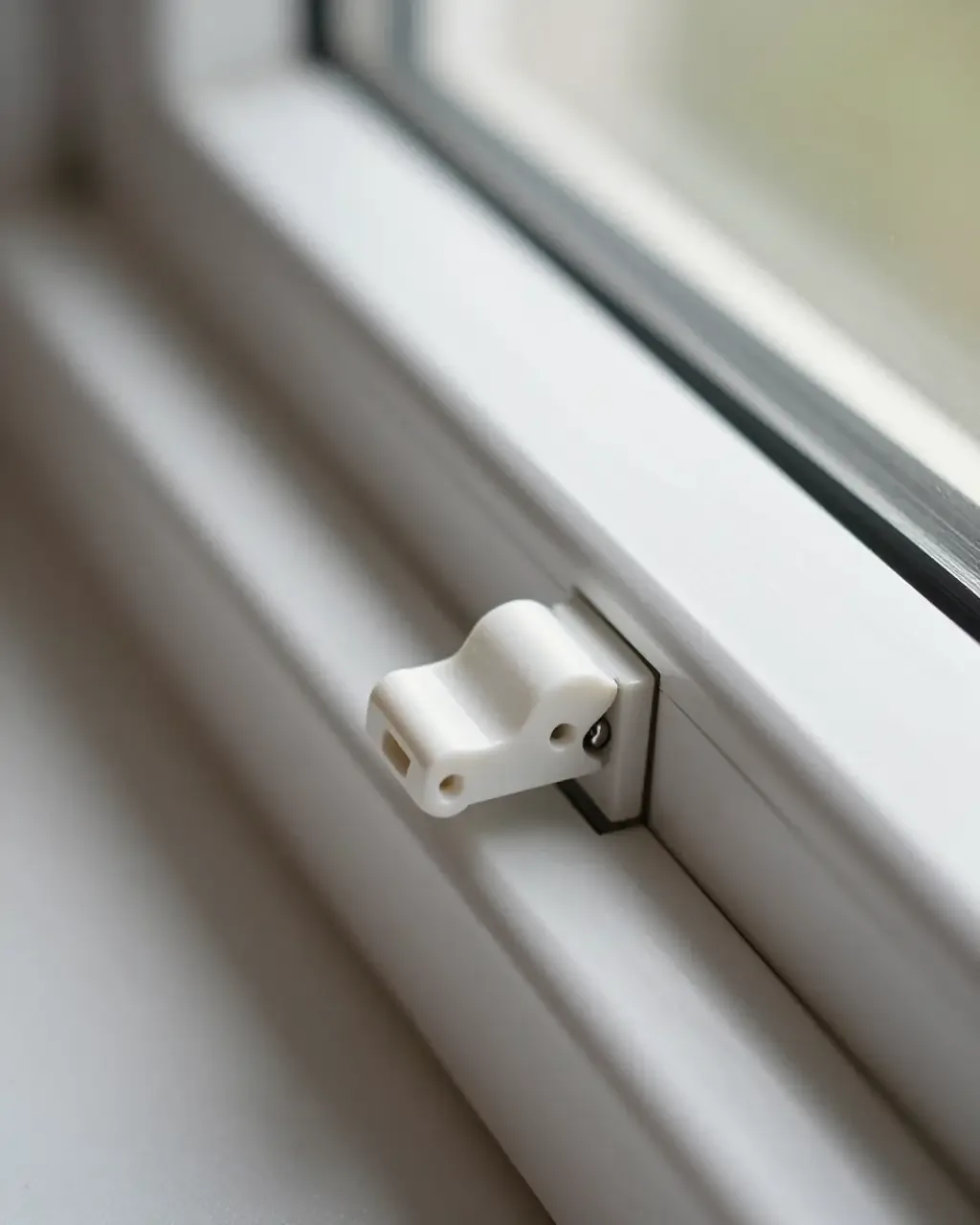
- Opening restrictor: caps how far a casement swings open, usually at a set angle, so the room still ventilates while the gap stays too narrow to pass through.
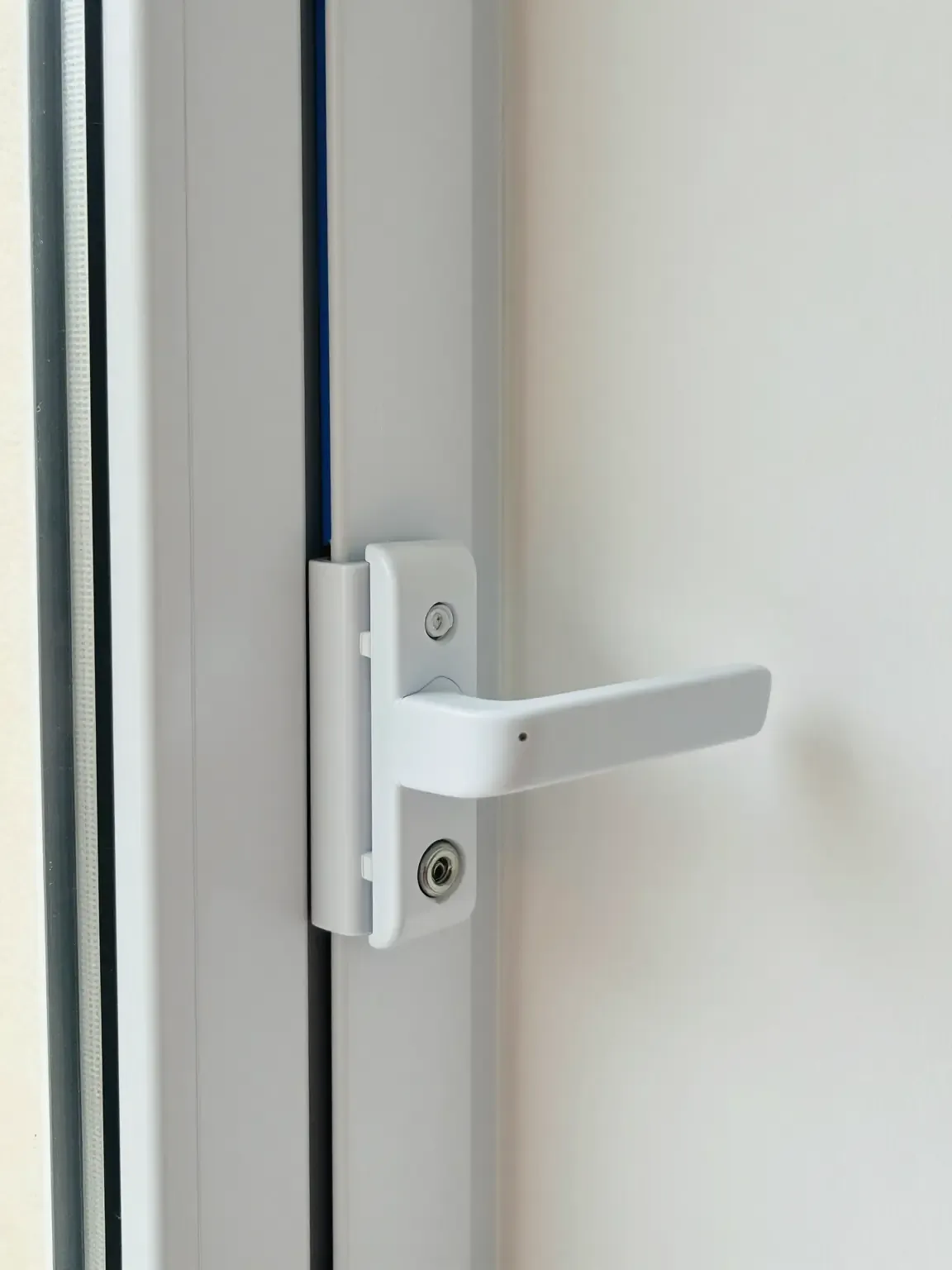
- Keyed sash lock: bolts the movable frame to the fixed one and releases only with a key, removing any chance of a child opening it alone.
- Handle lock: blocks the handle from turning at all, which matters on panels a preschooler can physically reach from a chair or sofa.
- Comb limiter: a notched bar that holds the leaf at fixed positions, cheap and quick to fit but worked loose by a determined toddler.
What each device does and does not do
| Device | What it does | Can be overridden | Best for |
|---|---|---|---|
| Opening restrictor | Caps the opening angle | With effort, older kids | Ventilation on upper floors |
| Keyed sash lock | Locks the movable panel shut | No, needs the key | Ground floor, balcony panels |
| Handle lock | Blocks the handle turn | No, needs the key | Movable panel within reach |
| Comb limiter | Holds fixed notches | Yes, little ones can | Adult-supervised rooms |
Why one device is never enough on its own
One device covers a single weak point, and a toddler finds the next one within days, so child window protection works as a small set rather than one fitting. The most common gap is a locked turn mode with an unguarded tilt mode, because the tilt gap at the top of the moving panel is exactly the opening a climbing toddler reaches for. On a turn-and-tilt unit the handle lock secures the turn function but leaves the tilt function live unless a second restrictor or a keyed lock covers the frame. Fitters in Almaty see this on balcony blocks most often, where one leaf tilts for air and the other opens fully. Check every opening mode on each panel, not just the one you use daily, and fit a lock that governs all of them. Fall risk from open sashes is addressed in the MACO user guide.
Matching a window restrictor to your sash type
The device is chosen to fit the leaf and the hardware, never the other way round. Here is how a turn-only sash, a tilt-and-turn sash and a balcony block each get the right part.
Turn-only versus tilt-and-turn sashes
A turn-only sash takes a simple restrictor or a keyed lock, while a tilt-and-turn window needs a device that works in both modes, and our engineers settle that at the measuring visit. On a turn-only sash the handle turns through a single arc, so a cable or arm restrictor mounted on the frame and the movable panel stops the gap at a set width. A tilt-and-turn unit has two motions, and a mechanism that ignores the tilt position is only half a barrier. Our measuring engineers check the handle height, the weight and the reveal depth before naming a model. On a tilt-and-turn sash the tilt position is the one parents leave open for air, so a fitting that only blocks the turn mode leaves the real risk untouched.
Fitting a window restrictor to Rehau, Deceuninck and Veka profiles
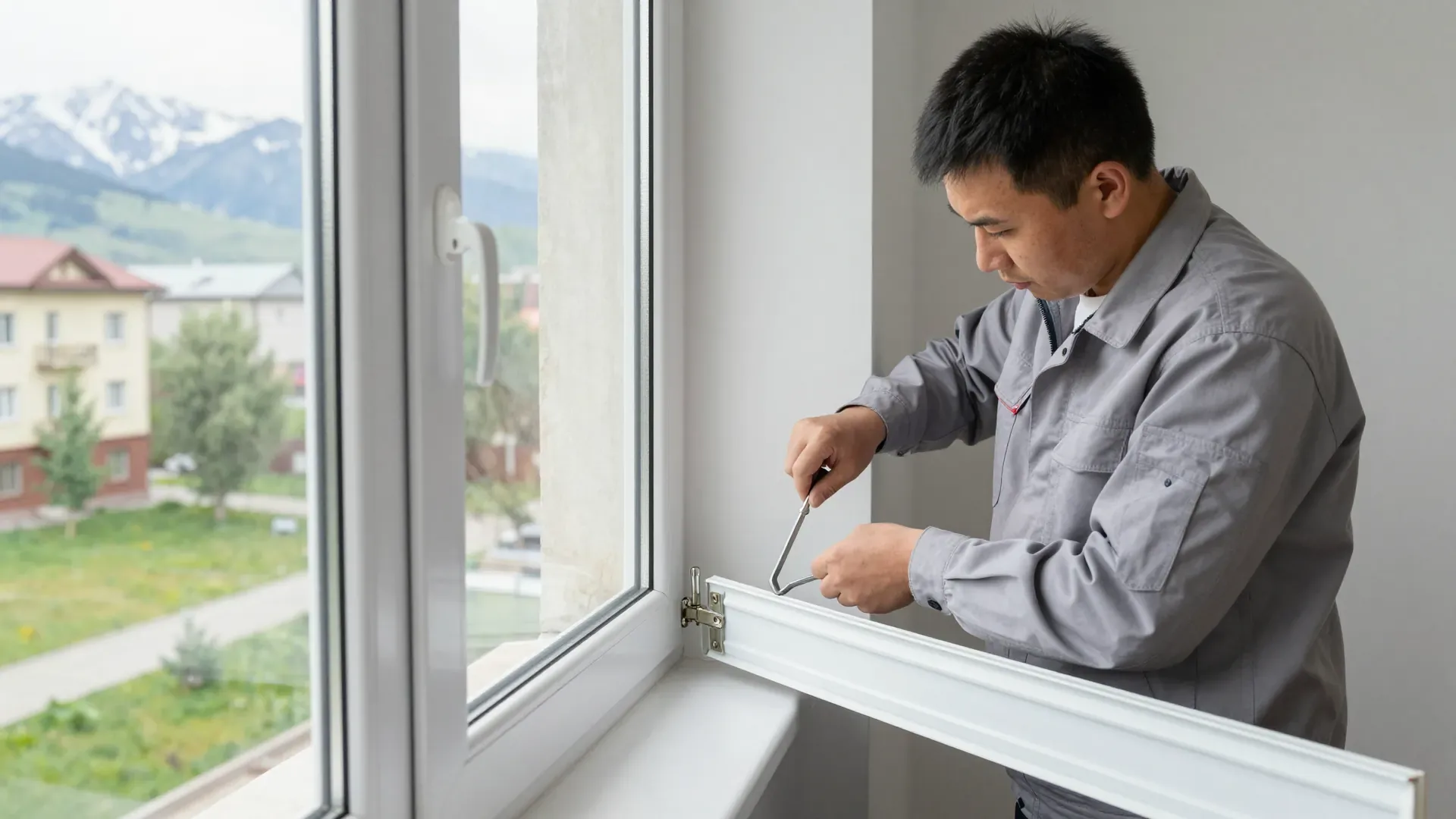
The device is matched to the leaf hardware rather than the profile brand, and we check the fittings on Rehau, Deceuninck and Veka sashes before recommending a model. The profile sets the frame geometry — Deceuninck Favorit at 71 mm with five chambers, Veka Proline 70, Rehau Blitz New — but the locking rail and the handle base are what a restrictor actually grips. Our crews fit units turnkey with their own hands, so the same team that hangs the movable panel also mounts the device and tests the gap. On an existing opening the deciding factor is whether it carries a standard locking rail; if it does, the part fits without touching the glazing or the seals.
Protecting a balcony block with a door and a sash
A balcony block needs two separate devices, one on the door leaf and one on the window half, because a child reaches the door handle first and the movable panel second. The door leaf is heavier and swings into the room, so the restrictor there carries a higher load rating than the window-side part, and a keyed child safety lock for the movable section goes on the glazed half. We bring the sub-sill, the flashing and the slope trim on the same day, which means the protection is measured around the finished frame rather than a bare one. The door leaf swings toward the room, so a restrictor there must be rated for a heavier leaf than the second device, and we size the two together at the measuring visit.
Why an insect screen is not a safety barrier
A mosquito net keeps insects out, but it is not built to hold a toddler's weight. Here is why it cannot count as fall protection and what to fit instead.
What insect screen safety really means
Insect screen safety is about keeping mosquitoes out, and the netting sits in a light aluminium frame that a leaning toddler can push straight out of its guides. The mesh is not a barrier. The frame clips into the opening with almost no load-bearing capacity, and the corners are held by thin plastic fasteners that flex under sideways pressure. On a turn-only leaf the netting is the only thing between the room and the drop, so a small body pressing on it pulls the whole assembly inward within a second. A protective insect screen rated for wind load still has no anchor into the wall or the profile — it rests in the reveal and lifts out. That is why it must never be treated as a fall barrier, whatever the netting strength.
What to put on the opening leaf instead
- Keyed sash lock: bolts the opening leaf to the profile and needs a key to release, so a toddler cannot open the window.
- Handle with a cylinder: replaces the standard grip and blocks rotation of the espagnolette, keeping the leaf shut without extra drilling.
- Opening limiter: limits travel to a fixed gap for ventilation while the hardware holds the rest of the opening.
- Tilt ventilation setting: leaves a narrow slot for air in the tilted position, so the room gets fresh air and the parent keeps control.
Choosing glass and fittings for a child's room
Glass in a child's room is chosen by how it behaves on impact, not by thickness, and fittings follow the same logic: what the sash does when a small body leans on it.
Standard, tempered or laminated glass
Tempered glass breaks into small blunt pieces and laminated glass holds its fragments in place, while standard annealed glass breaks into sharp shards. The difference sits in the pane itself, not in the profile: a 32 mm two-chamber unit can carry any of the three and keeps its insulating values either way. Tempered sheets are heat-treated so internal stress makes them crumble rather than split, and the fragments stay blunt enough that a cut is unlikely. Laminated builds bond two or more sheets through a plastic interlayer, so the plastic stretches and grips the broken pieces. That build stays in its frame after impact, which matters in a child's room because the pane does not fall out even when cracked. This is how safe windows for children are put together: the glass choice does the work, not the frame.
Glazing and fittings we specify for family windows
| Option | Behaviour on impact | Where we use it |
|---|---|---|
| Standard 32 mm unit | Sharp shards | Adult rooms, high sills |
| Tempered pane | Blunt pieces | Playroom, low sills |
| Laminated pane | Holds in frame | Child's bedroom |
| 52 mm unit (Geneo) | Extra chamber, same glass choice | Cold-side walls |
Fitting protection yourself or booking our crew
Some devices are a genuine weekend job with a screwdriver, others need drilling, adjustment and a feel for what sits behind the plastic. Here is where the line runs, and how protection folds into a full order.
When a DIY child safety lock for sash is enough
A clamp-on restrictor or a stick-on handle lock is a reasonable DIY job, but anything that needs drilling into the profile is where DIY usually goes wrong. A window restrictor that clamps to the frame or a handle cover with a key needs no tools beyond a screwdriver, and both hold well on a clean, dry surface. The moment a job calls for a hole in the moving panel, the question stops being about the bracket and starts being about the steel reinforcement hidden inside the chamber. A hole drilled in the wrong spot misses that steel, so the fixing holds in plastic only and works loose within a season, taking the guarantee argument with it. A restrictor set too far from the hinge also lets the opening go wider than the child-safe angle you intended.
How we build protection into a turnkey order
- Measuring visit: the engineer notes window type, opening direction and device position at the free measuring, before anything is quoted.
- Device choice: restrictors, handle locks and panel locks are matched to the profile series.
- One-day installation: sill, flashing and slope finishing go in alongside the windows, nothing left to finish later.
- Seismic standard: we install to GOST with 9-point seismic loads in mind, so every device fixing matches the frame standard.
- Timeline: from signed contract to installation takes no more than two weeks, with a personal manager on the order.
What truly keeps little ones safe near an open frame
Five rules cover almost every family window: a screen is not a barrier, the hardware must match the sash, a keyed lock beats a limiter, glazing choice matters at low sills, and drilling belongs to a fitter.
- Screens: an insect mesh keeps bugs out and nothing more, so never count it as fall protection.
- Sash type: match the fitting to the opening; a tilt-and-turn unit needs a model that covers the tilt mode too.
- Locks: keyed models and handle versions remove a child's access, while comb limiters only hold a position.
- Glazing: tempered or laminated panes change how the surface behaves on impact, which matters at low sills.
- Installation: anything that needs drilling into the frame is best left to a crew that knows where the reinforcement sits.