
Blog · 9 min read
Safe windows
for children
Author: OKNA PLAST editorial team
- Published
- Updated
How to keep a child from opening a window: opening limiters, handle locks and ventilation habits that make a home in Astana safer for toddlers and school-age kids.
Safe windows for children start with a sash a child cannot open alone. OKNA PLAST builds PVC windows in its own workshop in Astana and installs them with its own crews, adding a window restrictor, a child safety lock for sash or a key handle at the order stage. Every window comes with a 10-year warranty.
What really protects a child in windows for children safety
Protection works on two levels — the device fitted to the leaf and the construction of the window itself. Child window protection starts with what is not protection at all, because that mistake costs the most.
Why an insect screen is not a safety device
An insect screen holds its frame with light clips and flexible cord, so it is designed for insects, not for a child's body weight pressing on the mesh. The frame sits in the opening on small plastic brackets, and the mesh itself is a woven polymer that tears at a few kilograms of point load. A PVC profile has nothing behind the screen to catch a falling body — the leaf behind it stays open, and the screen gives way outward. Treat the screen as a ventilation filter only; if a toddler can reach the open leaf behind it, the screen adds risk rather than removing it, because it looks solid enough to lean on. The MACO user guide warns that adults must keep children away from an open casement because of the fall risk.
Devices that actually block the sash
A real protective device physically stops the leaf from swinging wide, and we fit it to the hardware that already sits on your window frame. The opening is then capped to a fixed gap, a sash lock holds the leaf closed or partly open, and both work through the existing handle and hinge points rather than the frame face. The fitting is only as strong as the frame it is screwed into, so on a thin-walled system a heavy stop can pull out under load; check wall thickness and steel reinforcement before choosing the model. On the windows we install, the opening stop is set at the measuring visit so the fixing lands on reinforced wall, not on hollow chamber.
Choosing between a window restrictor, a blocker, a lock and a key handle
Four devices solve the same task in different ways: the difference lies in who can release the restriction and how, and whether the part fits the hardware already on your window.
How the four options differ in daily use
| Device | What it does | Release step | Best for |
|---|---|---|---|
| Window restrictor | Caps the opening angle | Lever or button | Rooms aired daily |
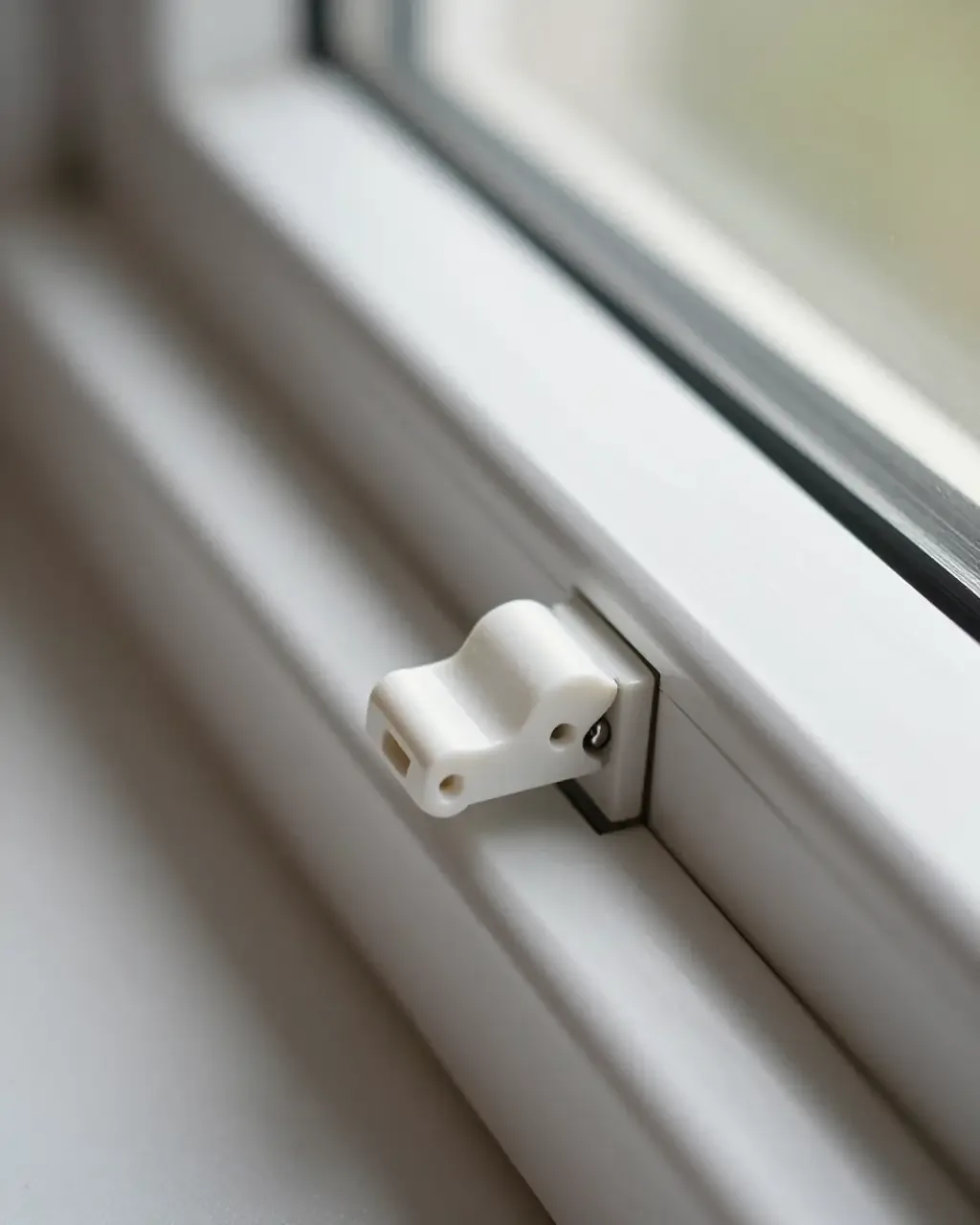
| Blocker (comb) | Holds sash at set steps | Manual reset | Tilt-and-turn sashes |
| Child safety lock for sash | Blocks opening entirely | Key | Low windows, first floor |
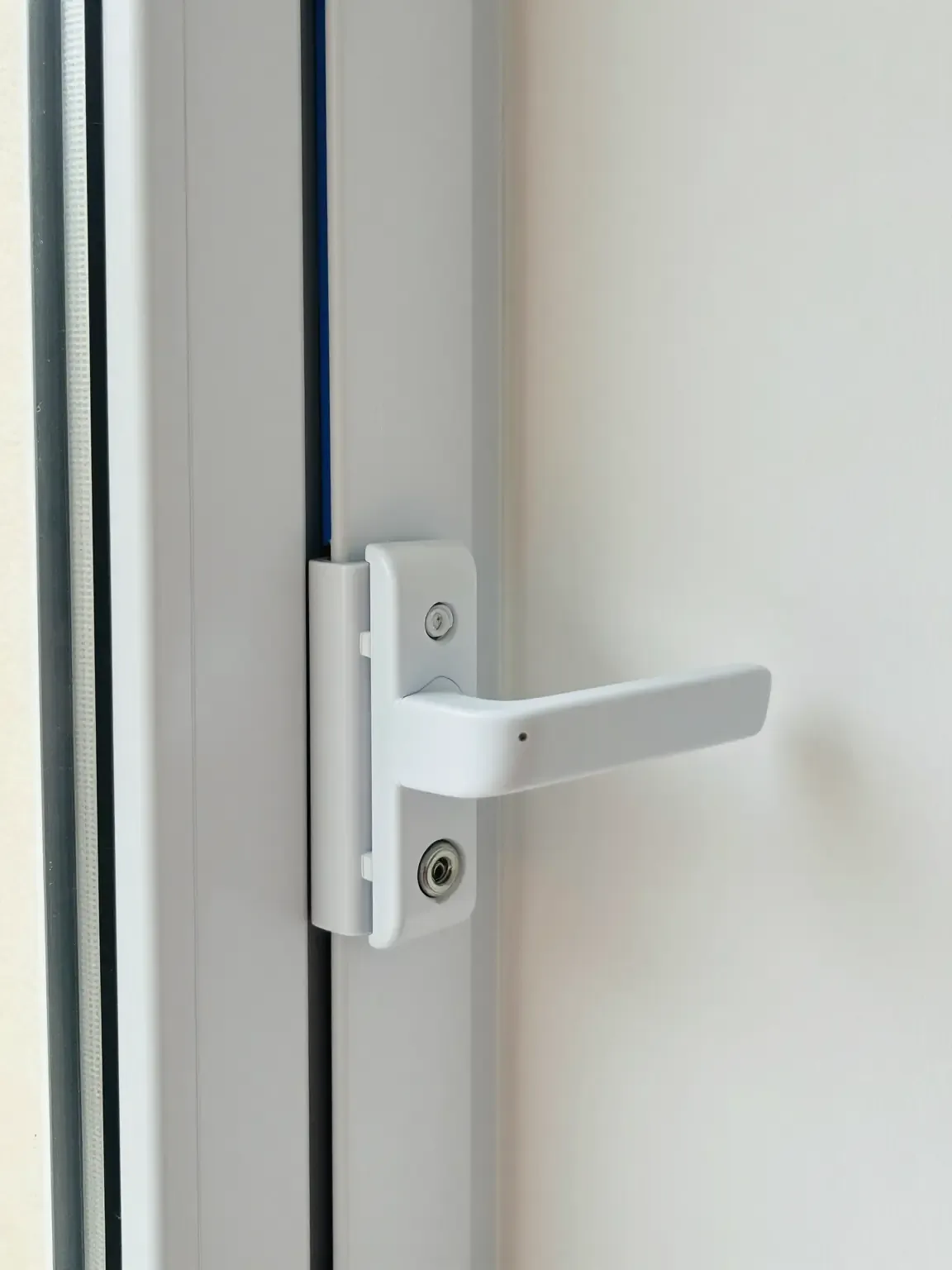
| Key handle | Locks the handle | Key | Simple retrofit |
Matching the device to your profile and hardware
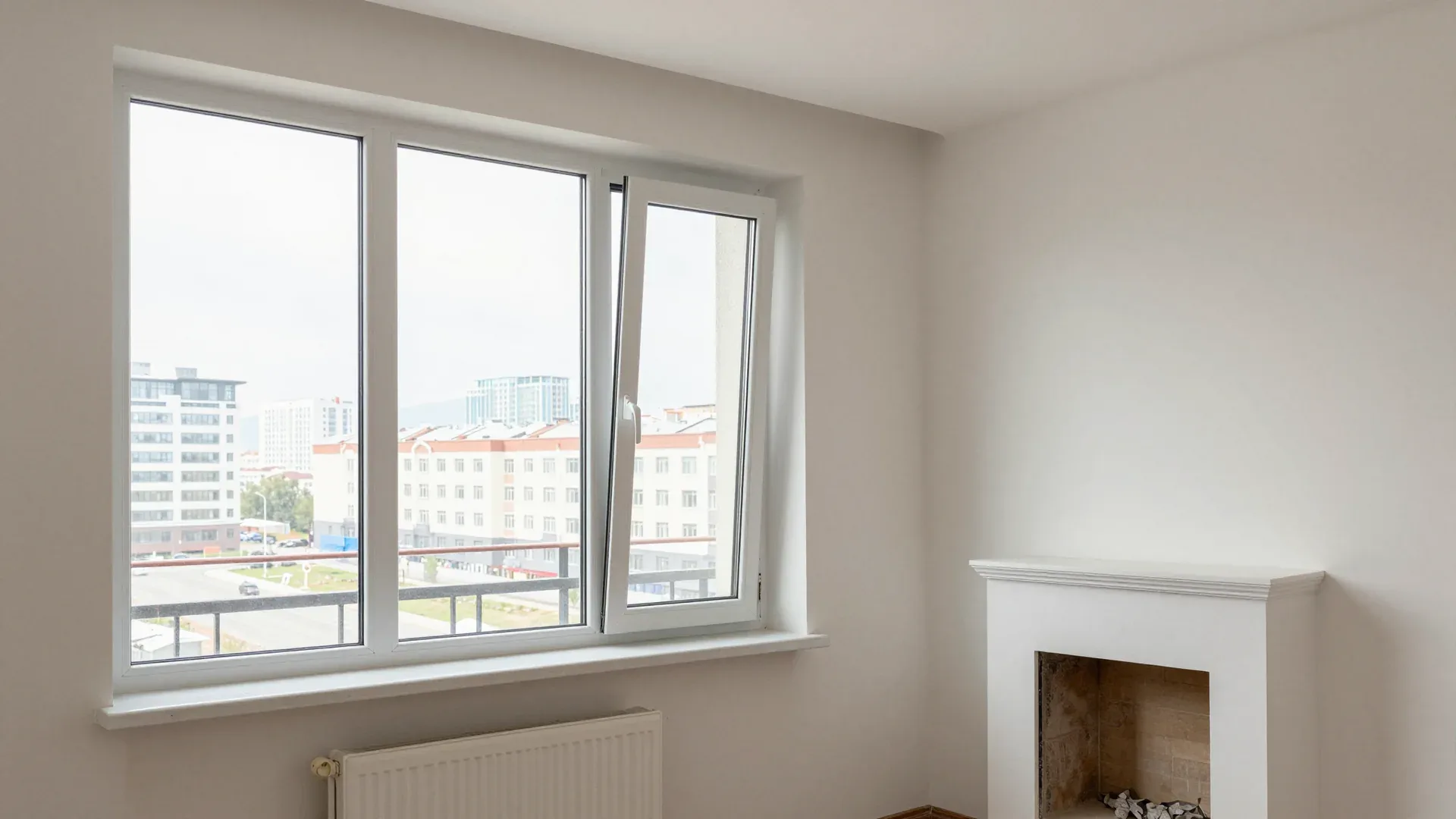
We check the hardware line and the leaf type before recommending a fitting, because a part made for a turn-only leaf will not work on a tilt-and-turn leaf. Our engineers match the protective fitting to the profile series you already have, whether that is a 60 mm frame with a 32 mm double-glazed unit or a wider 76 mm system with six chambers. The limiting part itself is small, but it must align with the hinge side and the reinforcement inside the frame. On tilt-and-turn windows the tilt gap is the weak point, so a device that only limits the swing leaves the top opening unguarded unless it also locks the tilt position. Ask for the hardware line name before buying any lock — a mismatched bracket either will not seat or will not hold.
What to specify when ordering windows for a family with children
Part of the protection of safe windows for children is built into the window at the measuring stage rather than bought later. Here is what is worth choosing in advance, before the profile is cut and the frame assembled.
Profile, glazing and hardware that support protection
A multi-chamber PVC profile with steel reinforcement and a double-glazed glass pack gives the movable sash the rigidity a protective device needs to hold under load. We work with Rehau, Deceuninck, Veka, Salamander and KBE series, where mounting depth runs from 60 to 82 mm and chamber count from 4 to 6; the reinforcement wall in the Deceuninck Favorit line is 1.5 mm, and Salamander bluEvolution walls are 3.3 mm. Two chambers of glazing cut heat loss and add mass that a restrictor or lock must restrain. That extra weight is why the hinge set has to match the glass. In our practice, families with small children gain most from a multi-chamber system, a two-chamber glass pack and hinges matched to the weight of the glass. Choosing the right system starts with these decisions at the measuring stage, before the frame is cut.
A short checklist for the measuring visit
- Bring the checklist: we settle the window system, glass, hardware and device in one pass, not after assembly.
- Name the rooms and the child's age: a bedroom restrictor and a balcony-door lock are separate orders.
- Confirm the opening direction: a tilt-and-turn sash needs a device working in both modes, a fixed pane none.
- Check the sill and radiator: the blocking part must not clash with the sill board or bracket.
- Decide the fixing points early: the workshop reinforces them while the structure is still open.
- Ask who handles the paperwork: a personal manager at OKNA PLAST carries the request from measuring to installation.
Safe ventilation in the Astana climate
The long frosty winter and steady wind here change how you air a child's room. A wide-open casement is both a fall risk and a draft, so ventilation has to work with the climate.
Micro-ventilation and supply valves instead of an open sash
Micro-ventilation and a supply valve bring fresh air in without leaving the casement open, so a child never has a full opening to reach. The hardware setting tilts the leaf a few millimetres at the top handle position, while a wall or frame valve feeds filtered outside flow through a small channel. Both keep the interior supplied while the frame stays locked at the handle. In our practice, families with toddlers run the valve continuously and use micro-ventilation for short top-ups after cooking or bathing. In a cold snap a brief burst of micro-ventilation clears the room faster than a cracked leaf held open for hours, and it keeps the frame from cooling through.
Why the installation detail matters in winter
A warm installation seam and insulated slopes keep a child's bedroom from drafting, so you can air it briefly instead of leaving a casement ajar against the wind. We assemble windows in our own workshop and fit them to GOST with the nine-point seismic factor of the region in mind, sealing the joint in three layers and insulating the slopes on site the same day. Wind-driven cold finds the weakest seam first, so a poorly insulated joint forces longer airing and more time with an opening a child can reach. It is the joint, not the profile, that decides how often you have to open the sash.
Fitting it yourself or calling a fitter
Some devices go on by hand and leave the profile untouched, while others need holes in the sash or casing. The line between the two runs through your warranty and the type of hardware you already have.
When a no-drill device is enough
A clamp-on or adhesive blocker that needs no drilling can be fitted by hand, and it leaves the profile untouched if you later change the window. Clamp models grip the sash edge and hold it at a fixed opening of a few centimetres, which is enough to stop a toddler from climbing out but still lets air through. Adhesive stops work on the same principle and suit inward-opening windows where a clamp has nothing to bite on. Neither touches the reinforcement or the hinge mechanism, so the unit keeps working exactly as it did before. Adhesive mounts rely on a clean, warm surface, so fitting one onto cold PVC in winter is the most common reason it lets go under a child's push.
When drilling into the profile is a job for a fitter
Any device that screws into the window frame or casing should go to a fitter, because a misplaced hole can breach the reinforcement and void the warranty on the window. The steel core sits a set distance behind the PVC wall, and a screw that is too long or angled reaches it. A hole drilled through the reinforcement lets moisture reach the steel core, and that shows up as a cold spot long before it shows as a failed device. We give a 10-year warranty on windows, and our fitters place every fixing where the profile can carry it without losing strength. If a lock or restrictor needs to sit on the outer part, book the visit rather than reaching for a drill — the same team handles adjustment and hardware swaps afterwards.
How to choose the right protection for your kid's age
Five points decide whether a window is genuinely child-safe, and each one is settled before or during installation rather than afterwards.
- Insect screens filter, they do not block: a mesh keeps flies out but gives way under a child's weight, so never treat it as a barrier.
- Match the device to the opening type: a swing-only stop still leaves the tilt gap unguarded on a tilt-and-turn unit.
- Settle profile, glass and fittings at measuring: reinforcement and fixing points are prepared in the workshop, not on site.
- Ventilate through micro-ventilation or a supply valve: an open leaf in a windy winter is the main draught and fall risk.
- Leave drilled fittings to a fitter: a misplaced screw in the reinforcement weakens the frame and voids the warranty on handles.