Blog · 9 min read
Energy efficient windows
how they work

A practical guide to low-e glass, warm spacers and condensation — and how to tell whether an upgrade will pay off in Almaty.
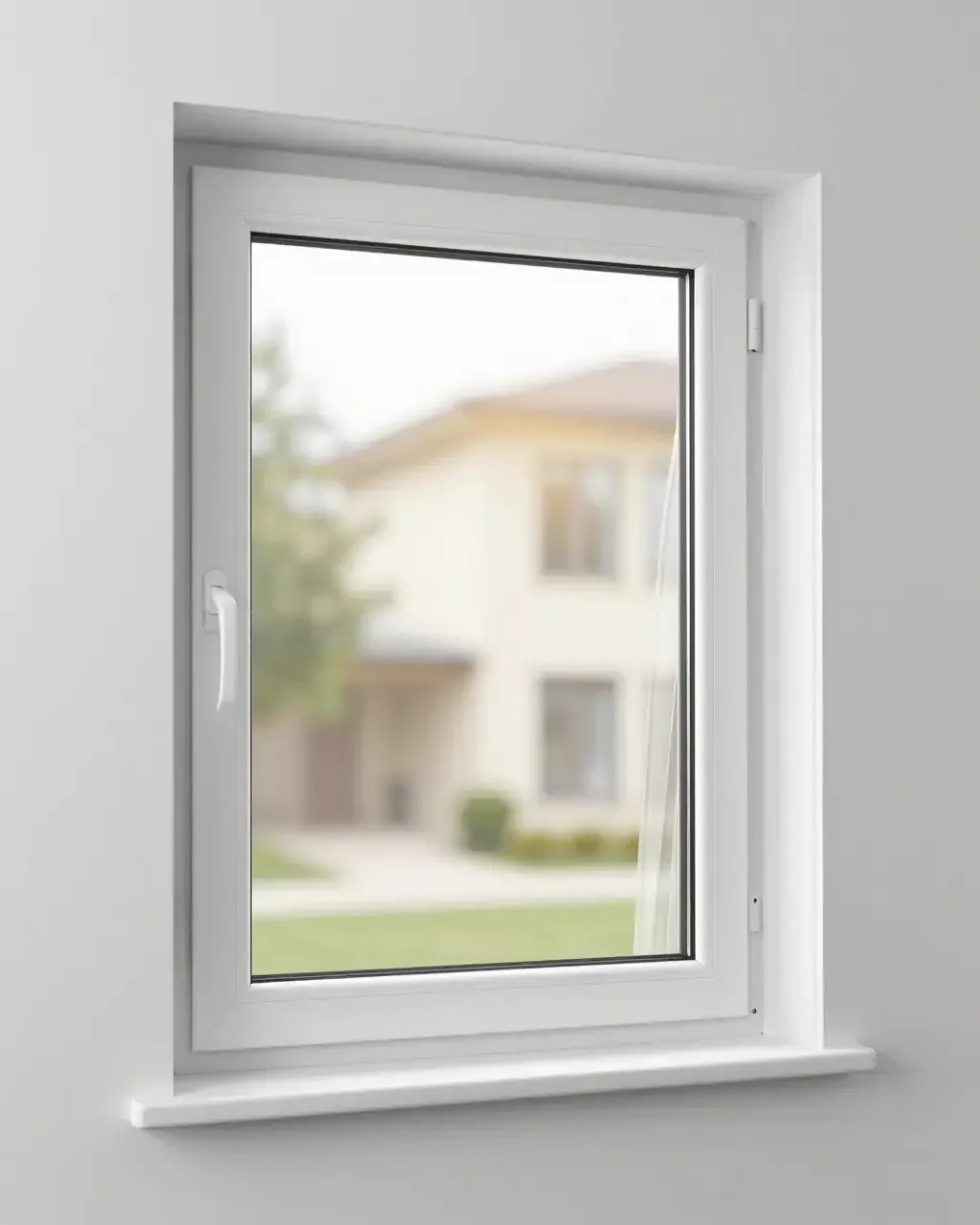
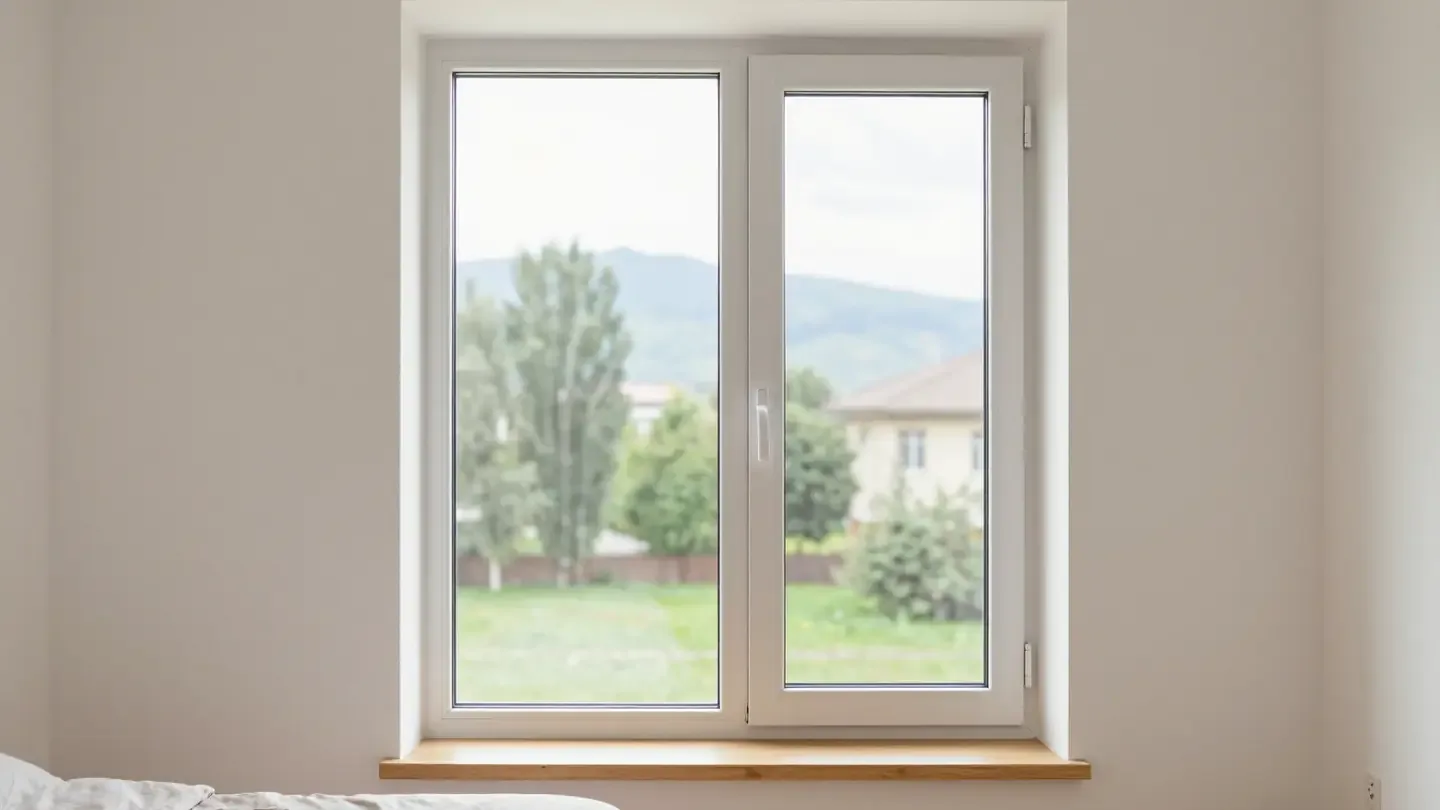
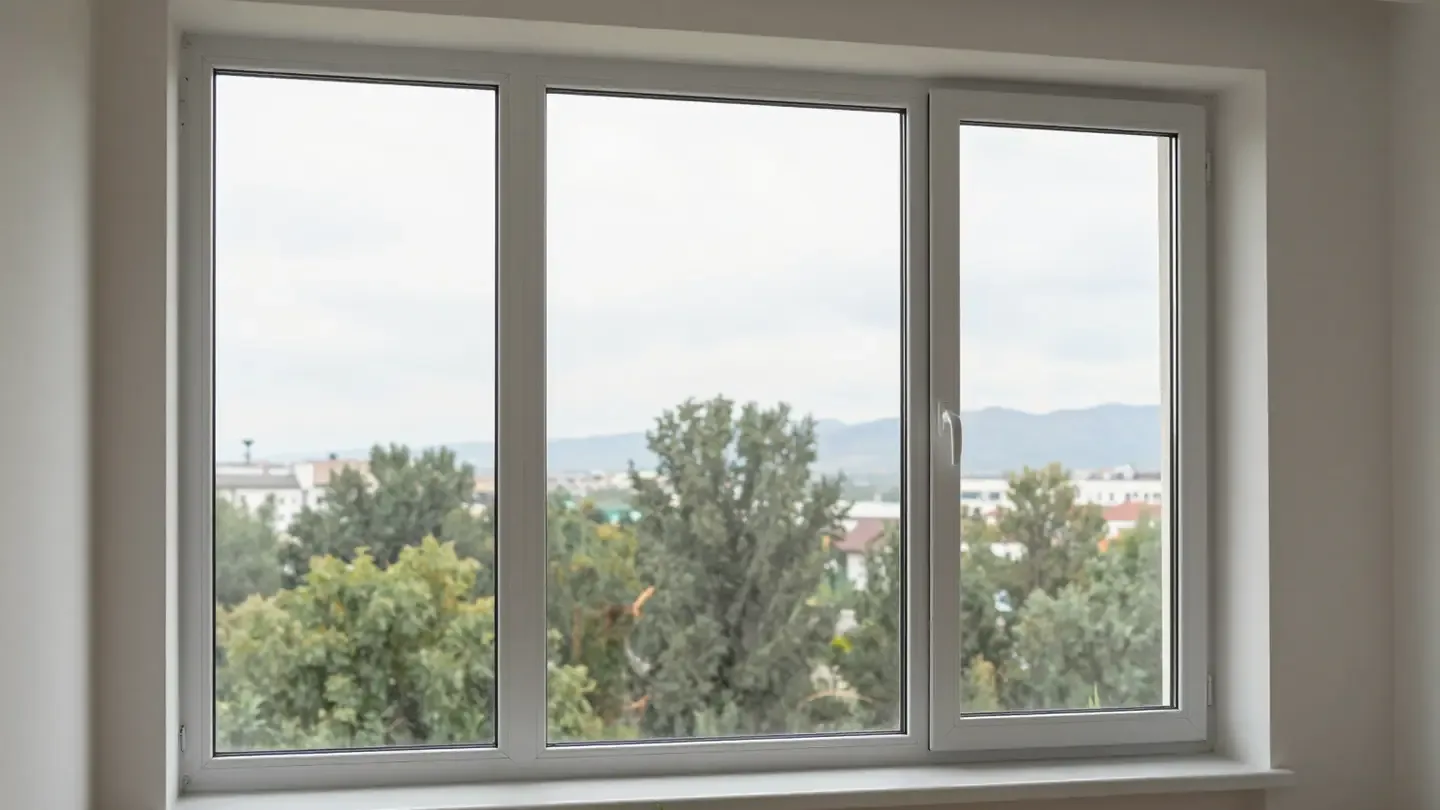
Energy efficient windows how they work comes down to a low-e coating that reflects radiant heat back into the room, a multi-chamber PVC frame, sealed gas between the panes and a warm-edge spacer. OKNA PLAST builds and installs these units with its own crews, so glass, frame and fitting work as one system.
How a window loses heat and what brings it back
Energy leaves a room along three routes at once: solid material, moving air and invisible radiation. A well-built assembly closes all three, which is why one good layer alone rarely changes the bill.
Three routes heat takes through a window
- Conduction: warmth travels straight through the frame, sash and spacer at the edge, so a thin-walled profile leaks before the glazing is even considered.
- Convection: air inside the chambers and between the panes starts to circulate, carries warmth to the cold outer pane and hands it to the street.
- Radiation: long-wave heat from radiators, furniture and people passes through clear glass as if it were absent.
- Closing all three: a multi-chamber profile, a wide gap and a coated pane work as one barrier, and skipping any leaves the other two exposed.
How a warm flat keeps comfortable in winter
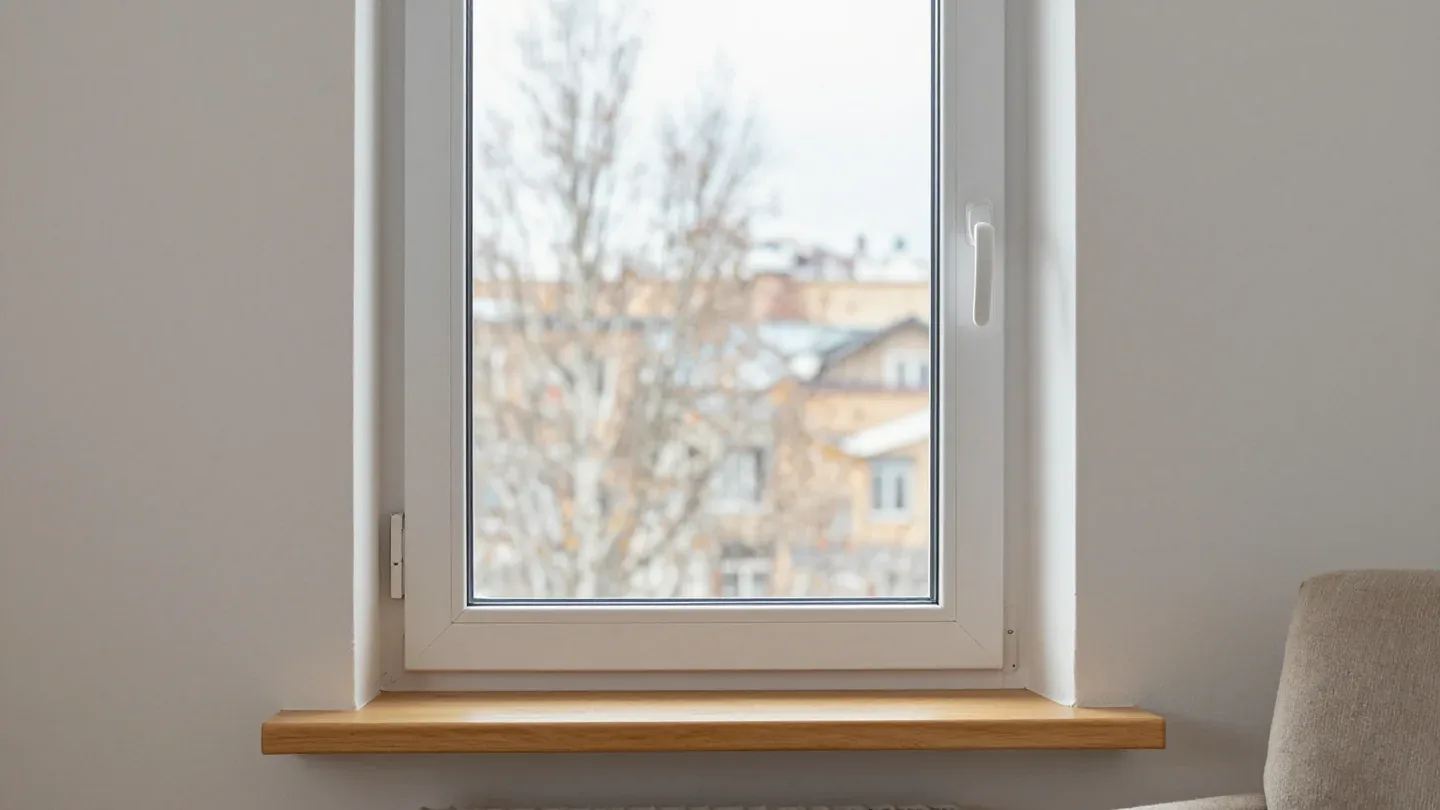
A warm apartment in winter windows keep comfortable because the low-e coating reflects long-wave heat back into the room instead of letting it radiate outward. That layer is a microscopically thin metallic film on the inner side of the pane, transparent to daylight while it blocks the thermal radiation radiators and furniture give off. Our engineers measure each opening before production, because glazing width and the number of profile chambers have to match the wall and the orientation of the flat. The inner surface then stays closer to room temperature, so the air near the window does not chill and drop to the floor as a cold draft. Residents of Almaty notice this most in flats with a glazed balcony, where the old unit used to pull warmth down along the glass all evening.
What energy efficient windows are and how they work with low-e glass and the coating
Low-e is an invisible microscopically thin layer on the pane surface. Below we explain what it does through winter and summer, and how the two families of coating differ in assembly.
How energy-saving glass works and what its coating does
The film comes down to a microscopically thin metallic oxide layer that lets daylight through but reflects long-wave heat radiation back into the room. The film is measured in nanometres, far thinner than a human hair, and it does not tint the view or cut visible light the way tinted film does. In a sealed unit the coated surface faces the cavity, so the warmth your radiators give off bounces inward instead of escaping through the pane. On a sunny summer day that same film reflects part of the incoming infrared, which keeps the interior from overheating. Because it works on radiation rather than air movement, performance holds even when the room is draughty, unlike a seal that only blocks airflow. Coating specifications for low-emissivity panes appear in GOST 31364.
Soft-coat and hard-coat compared
| Coating type | Where it sits and what it gives |
|---|---|
| Soft-coat | Sealed inside, highest heat reflection |
| Hard-coat | Can face the room, more scratch-resistant |
| No coating | Plain pane, warmth radiates out |
Argon and warm-edge spacers inside the unit
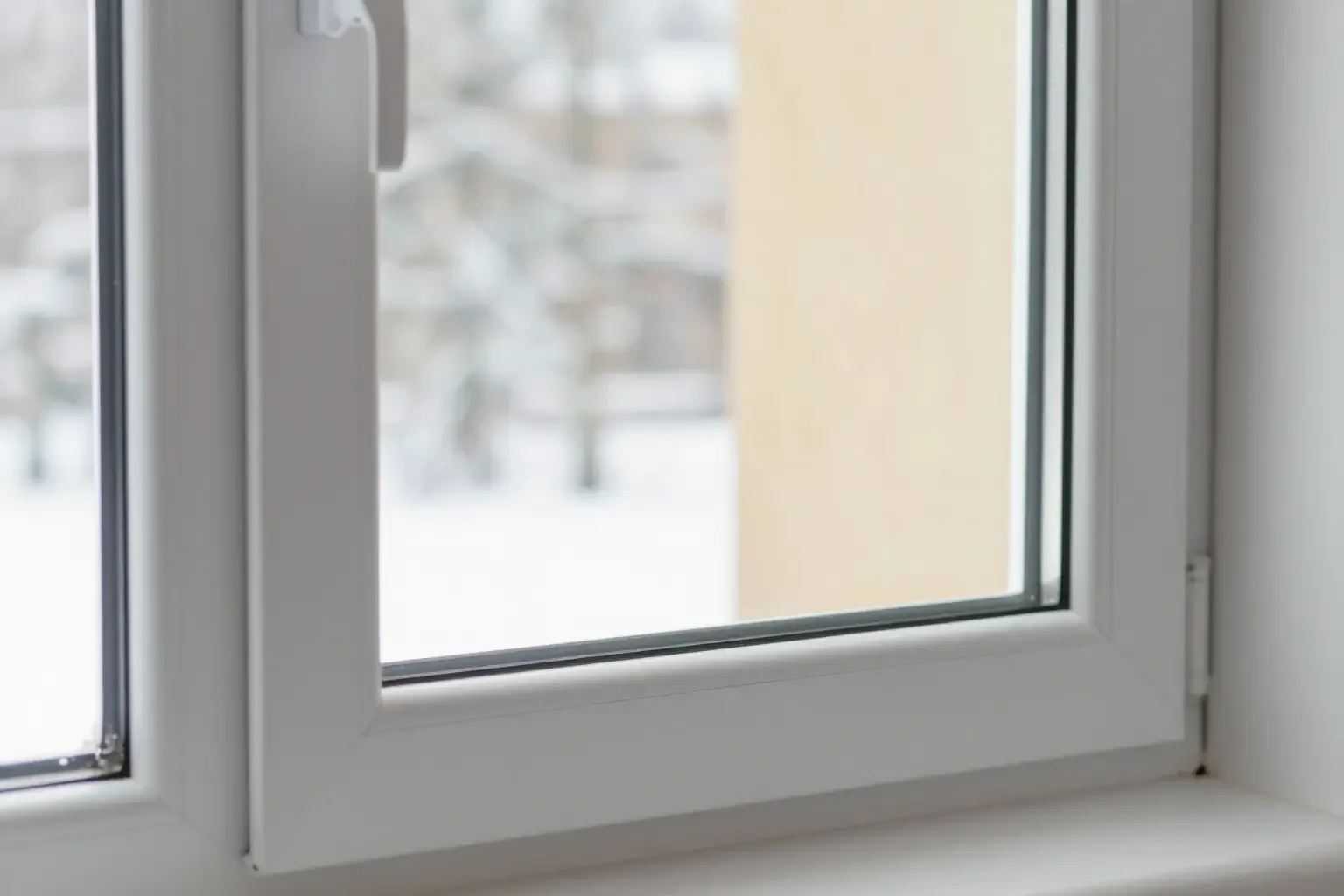
We fill the gap between the panes with argon and seal the perimeter with a warm-edge spacer, so convection inside the cavity slows and the cold bridge at the frame shrinks. Argon is heavier than air, which cuts the slow circular current that carries warmth from the inner pane to the outer one. The strip separates the two panes without a solid metal bridge — on a cheap assembly that aluminium edge is the coldest line on the frame. In our workshop we check the width against the glazing, because a mismatch there undoes the gas fill within a couple of seasons. The insert matters as much as the gas, because the metal perimeter of a bargain assembly is where condensation and heat loss usually start first.
The parts that make energy efficient windows work and how they are built
Efficiency here is the sum of profile, glass unit, chambers and seals working as one assembly. We break down each layer and show how they add up to a single window.
Profile chambers and glazing width for a cold winter
For a cold winter we match a multi-chamber profile to a two-chamber glass unit, and the chamber count plus mounting width decide how much convection the frame and glazing block. A 76 mm profile with six chambers holds a wider unit than a 60 mm frame with four, so the air pocket between the panes has room to do its job. Each extra chamber slows the loop of cold air inside the frame, and steel reinforcement keeps the whole section from flexing under wind load. More chambers help only up to the point where the glazing keeps pace, so a deep frame with a thin pane wastes the extra depth.
Matching profile and glass unit options
| Profile series | Chambers and width | Unit it takes |
|---|---|---|
| Rehau Geneo | Multi-chamber, 3 seals | Up to 52 mm |
| Deceuninck Favorit Space | 6 chambers, 76 mm | Two-chamber |
| SMART | 4 chambers, 60 mm | Two-chamber 32 mm |
Seals and reinforcement that hold the system together
We rely on up to three seal contours and steel reinforcement in the profile, so the frame keeps its geometry and the seals stop draughts and moisture at the joints. Two contours cover the sash and frame rebate, a third closes the gap at the glazing bead where most leaks start. Reinforcement runs inside the main chambers at 1.5 mm wall thickness on the Deceuninck line, which keeps the sash from sagging over years of opening and closing. A glazing assembly that fogs between the panes usually lost its edge seal, which is a different failure from a draughty frame and needs a different fix.
Window condensation cause and what it tells you
Condensation is not always a sign of a faulty window. Where the moisture appears, and whether it sits on the room side or inside the glazing, tells you what to fix first.
Window condensation cause inside the room
The cause inside a room is warm moist air meeting a surface below the dew point, so water appears where the glass or frame is coldest. Cooking, showering, drying laundry and breathing all add vapour to indoor air, and that vapour settles on the first cold surface it reaches. The dew point depends on both temperature and humidity: at 20 °C and 50 % relative humidity it sits near 9 °C, so any inner surface below that line collects droplets. A single-chamber pane in a thin profile cools faster than a two-chamber one at 32 mm, which is why the same household sees mist on one pane and not another. A better product lowers the surface temperature threshold, but if indoor humidity stays high the moisture simply moves to the next cold spot instead of disappearing.
Inside the room versus between the panes
- Room-side condensation: droplets on the glass and frame that you can wipe off, driven by humidity, cooking, laundry and weak ventilation rather than by the window itself.
- Fog between the panes: a milky haze locked inside the sealed glazing, which no cloth can reach and which signals a failed edge seal and a glass unit that needs replacing.
- What we check first: we measure indoor humidity and the temperature of the inner surface, because room-side droplets usually respond to ventilation and a warmer inner face.
- When the glazing itself is at fault: fog that stays put in dry weather cannot be wiped away, so the sealed unit has to be replaced rather than dried out.
When energy efficient windows pay off and how we install them
Payback depends on two things at once: how much heat the window holds and how well it is set into the opening. We look at the logic of both.
When such windows start to pay off
Energy efficient windows how they work starts to pay off when the heat they keep in cuts the energy spent on heating in winter and on cooling in summer, so the saving runs in both seasons. A low-e coating reflects long-wave heat back into the room on a cold night and limits solar heat gain on a hot afternoon, so one layer does two jobs across the year. In Almaty the swing between a minus winter and a plus-thirty summer is wide, which tests the same unit in both directions. The payback is not a winter-only story: the coating that holds warmth inside also keeps the summer sun from overheating the flat.
Installation that keeps the performance intact
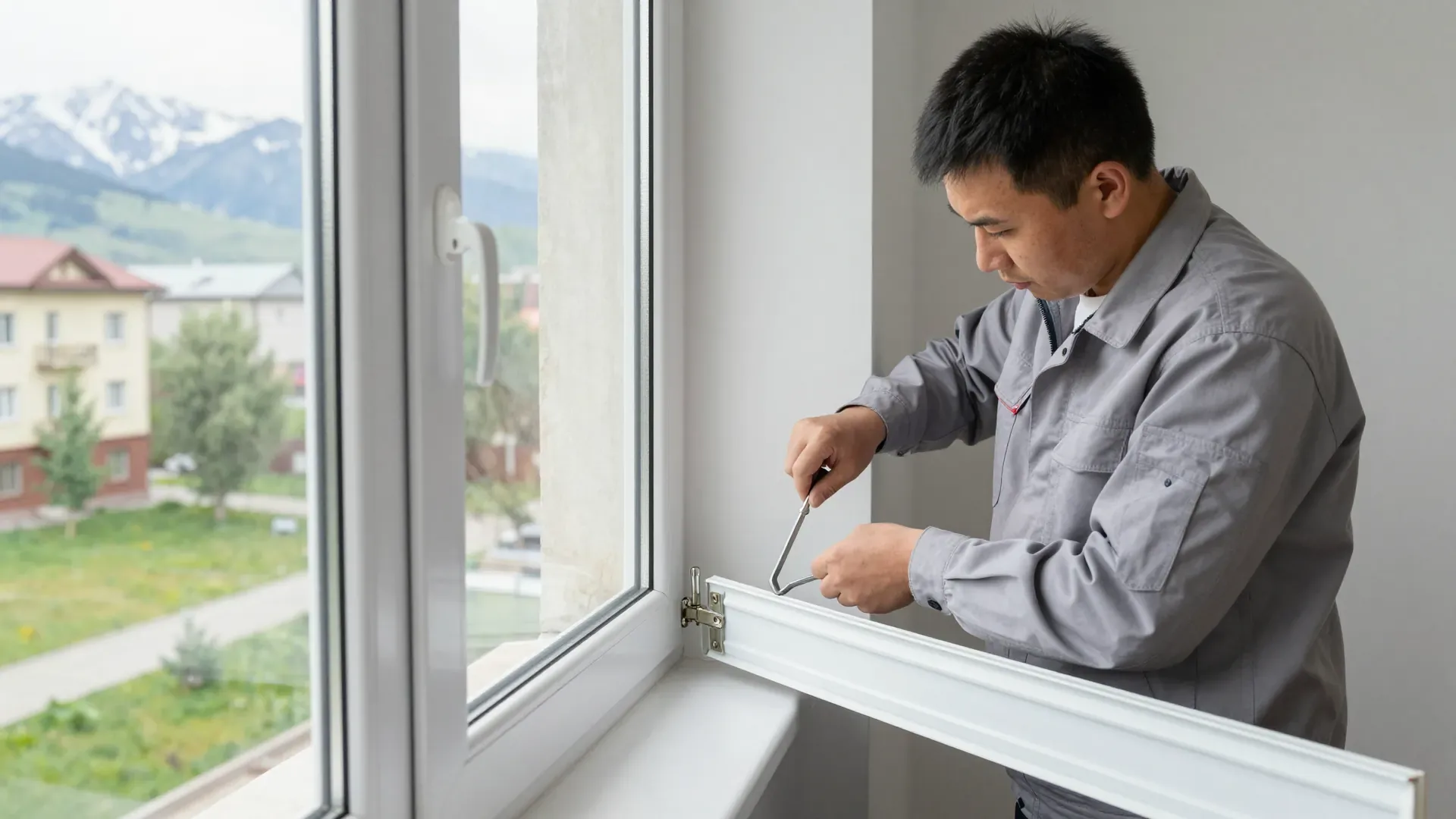
We install to the state standard with the seismic load of Almaty in mind, because a well-made unit loses its performance if the fitting leaves gaps or compresses the frame. A compressed frame distorts the sash, the seal stops meeting the profile evenly, and cold air finds the line where the two should touch. The mounting foam and the vapour-tight tape on the inside do as much for the warm contour as the profile chambers, and a rushed crew skips the tape more often than the foam. On higher floors the seismic load matters too: the frame is fixed so it moves with the building instead of cracking at the corners.
Turnkey fitting and support after installation
We fit the window turnkey, setting the sill, flashing and slopes ourselves in the same visit, and back the result with a ten-year warranty on the windows and a five-year one on the sills and slopes. Because the same team measures, builds and fits, there is no gap between the unit and the opening where responsibility usually falls between suppliers. From the signed contract to installation takes no more than two weeks, and the price is fixed in that contract with the sill, slopes, flashing, dismantling and fitting already inside the figure. After fitting, our service covers adjustment, new seals, handles and glass units, and a personal manager stays with the order.
What determines the real savings from window replacement
An energy-efficient window is a system, not a single part. Below is the short version of how the pieces work together and what to watch for after installation.
- Heat loss has three paths: conduction, convection and radiation each need their own barrier in the frame and glass unit.
- Low-e coating: reflects radiant heat back into the room while daylight still passes through the glass.
- Chamber count and glazing width: must match each other, or the extra frame depth brings no benefit.
- Condensation as a signal: room-side fog points to indoor humidity, fog between panes to a failed seal.
- Payback: comes from winter heating and summer cooling together, and correct fitting protects that return.