
Blog · 9 min read
Energy efficient windows
how they work
Author: OKNA PLAST editorial team
- Published
- Updated
A practical guide to the physics of heat loss: what low-e glass does, why condensation forms, and when a window upgrade pays for itself. No sales talk, just the mechanics.
Energy efficient windows work as one system: a low-e glass coating reflects heat back into the room, a multi-chamber profile slows heat loss through the frame, and a warm seam with insulated slopes stops cold at the perimeter. OKNA PLAST builds them in its own workshop and installs them with its own crews.
What energy efficient windows are made of and how they work to hold heat
An energy efficient window is not one part but a system of glazing, frame and installation working together. Here is what actually traps warmth inside a flat through the cold months and why each layer matters.
How low-e glass and the glass unit keep warmth inside
An invisible metallic layer reflects infrared radiation back into the room instead of letting it escape through the pane. That film sits on one surface of the sealed assembly and is rated by emissivity — the lower the figure, the less radiant warmth the surface gives away. Warmth leaves a room through a window in two ways: as radiation off the surface and as air leaking past the frame, and a low-e layer targets only the first. Combined with a sealed gap, it turns a plain pane into a reflecting barrier that keeps warmth on the room side. This is the core of the whole system in practice. The layer handles radiation, not drafts, so its effect is strongest on the pane itself — the frame and the seam around it still need separate attention.
Double-glazed unit, argon and a cold glass edge
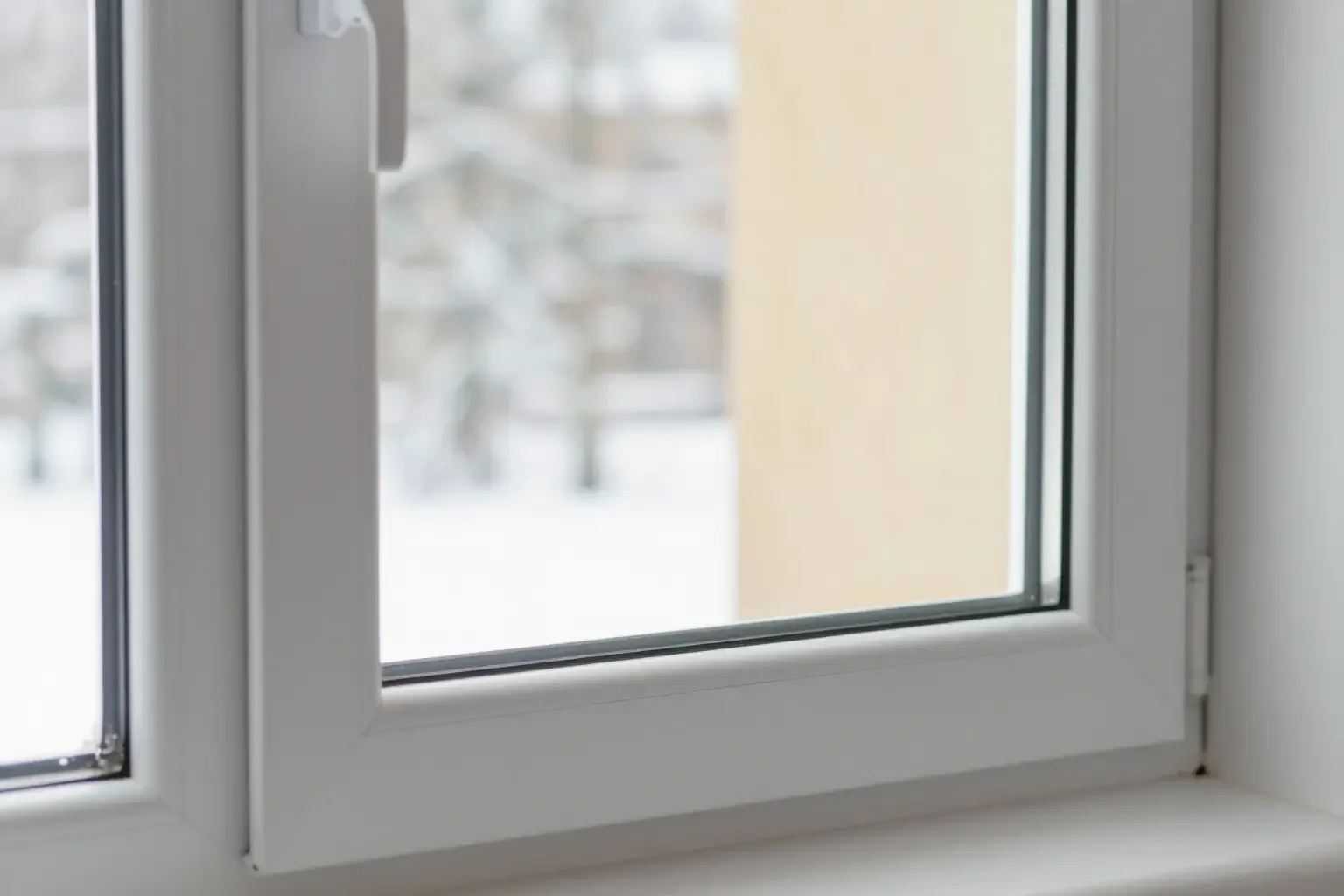
We fit a double-glazed assembly with two gas gaps for Astana, and argon between the panes slows transfer while the low-e coating reflects it back. The assembly holds three panes and two sealed chambers, and the argon filling each one is denser than air, so convection between the layers drops. A spacer bar keeps the panes apart, and that spacer is where the edge runs coldest. A cooler rim in frost is normal physics, not a defect — the spacer and frame always run a little colder than the centre, so judge the window by the whole perimeter, not one spot. When you compare options, ask which pane carries the coating — that single detail decides how much radiant warmth the assembly returns. Low-emissivity soft coatings on panes are specified in GOST 31364.
How many profile chambers Astana winters actually need
Profile chambers are the sealed air pockets inside the frame, and each one adds resistance to heat transfer. Their number matters only together with the mounting width and the glass unit beside them.
Chambers, mounting width and what the numbers mean
For the long frosty winter and strong wind here we recommend profiles with at least five chambers and a mounting width from 70 mm, paired with a double-glazed unit. The chambers slow heat transfer through the frame, the reinforcing steel inside the main chamber carries the sash weight, and two or three seal contours cut drafts along the opening. Mounting width is what separates a real winter profile from a slim one: 60 mm frames hold four chambers, 70 mm frames hold five, and 76 mm frames hold six. More chambers help only when the profile is wide enough to hold them without thinning the walls — a narrow profile packed with chambers loses stiffness, which shows up as sagging sashes over the years.
Profile options we work with and their parameters
| Profile line | Chambers | Mounting width | Glass unit up to |
|---|---|---|---|
| SMART | 4 | 60 mm | 32 mm double-glazed |
| Vitra | 4 | 60 mm | 32 mm double-glazed |
| Deceuninck Favorit | 5 | 71 mm | double-glazed |
| Deceuninck Favorit Space | 6 | 76 mm | double-glazed |
| KBE 76 | 6 | 76 mm | double-glazed |
| Salamander bluEvolution | 6 | — | double-glazed |
| Rehau Geneo | — | — | up to 52 mm |
Why installation and slopes decide whether the window keeps heat
Even a warm glass unit loses its point when the mounting joint and slopes let air through. Here is how installation affects heat retention and how to check it yourself.
The warm installation seam, slopes and seismic bracing
We install to GOST with a warm three-layer joint and insulated slopes, and we account for the 9-point seismic rating of the region so the frame stays square and airtight. That gap between sash and wall we fill in layers with foam, sealant and a vapour-tight tape, so it does not freeze through in a frosty winter with strong wind. Slopes get insulation underneath, not just a decorative panel over a chilled reveal. Bracing matters too: under seismic loads the structure must not shift, or the mounting line opens and tightness is gone. An uninsulated slope becomes a thermal bridge around the whole opening, so the warmest glazing still fogs at the edges if the reveal behind it is left bare.
How to tell a seam problem from a glazing problem
A draft that runs along the sash and slope points to the joint or the gasket, while chill that spreads across the whole pane points to the sealed assembly. Run the back of your hand along the edges on a frosty day, then across the centre of the pane: a localised chill at one side means mounting or sealing, an even chill over the whole surface means the glazing itself or a failing glass coating. Check the seal contours too, since a compressed or shifted gasket lets air slip past the sash. Test with a thin paper strip at the edge: if it pulls out easily, the leak is real. If the trouble is localised at one side, the fix is usually adjustment or resealing, not a full replacement.
What condensation on energy efficient windows tells you about how they work
Condensation is not automatically a window defect. Where exactly the moisture appears tells you where heat is escaping and whether the fix is ventilation, adjustment or a service call.
The window condensation cause inside the room
The cause indoors is the dew point — warm moist air meets a surface cold enough to condense, which in winter is usually the pane or the slope edge. Air at normal room humidity holds water vapour until it touches a surface below a certain temperature, and that boundary shifts with both humidity and outside cold. Cooking, drying laundry and sealing a flat tight raise indoor moisture; a two-chamber assembly with a low-e layer keeps the inner pane warmer than a single-chamber one, so the dew point sits lower and fogging starts later. The coldest spot on most assemblies is the glass edge where the spacer meets the frame, which is why a thin line of water there appears first. Better ventilation and lower indoor humidity move the dew point.
Condensation inside the unit or on a new window
Moisture between the panes means the sealed unit has lost its seal, and that is a case for a service visit, not a wipe-down. A double-glazed unit is factory-sealed with a desiccant-filled spacer; once that barrier fails, vapour migrates in and fogs the cavity permanently, and no amount of interior ventilation clears it. Our after-installation service covers pane replacement, and we handle the swap without touching the frame. Condensation on the room side of a brand-new window in the first cold weeks is common while the flat dries out after renovation, so watch whether it clears as ventilation settles before calling it a fault — fresh plaster and paint release litres of moisture that take weeks to leave.
When energy efficient windows how they work pay off and when not
Payback depends less on the window itself than on what stood there before and how the new window is fitted. We break down the conditions where the investment holds up and the cases where it does not.
What drives the payback on heating
The payback comes from reduced heat loss through the window area, so it is largest where the old windows leaked badly and the heating ran hard to compensate. A flat with single-chamber glazing, dried-out gaskets and a thin seam loses warmth through the frame perimeter as much as through the pane, and that is where a two-chamber assembly with argon and low-e coating changes the monthly heating figure most. In a block where the glazing was already decent, the same upgrade moves the number far less. A warm apartment in winter windows help most when the whole envelope is addressed — a new window in a flat with a cold slope and an unsealed seam saves far less than the same one installed as a full system. Our fitters treat the seam, the slope and the sill as one assembly for exactly this reason.
When a full replacement is not the answer
If the frame and seam are sound and only the panes are old, replacing just the sealed assembly can be the sensible move rather than a full window swap. We check the profile for warp, run a hand along the seam for cold draughts and look at the slope insulation before recommending anything. A full replacement pays off when the frame itself is warped, the seam is cold, or the slopes are uninsulated — otherwise the money goes into parts that were already doing their job. Where the frame is fine, a fresh double-glazed assembly restores most of the thermal performance at a fraction of the work, which is how energy efficient windows work in practice. Our after-installation service covers adjustment, gasket and handle replacement and glass unit swaps across 13 services, so an older block can be brought back without tearing out the whole opening.
What to check on your windows before measuring
The sections above trace heat loss through every layer of an opening. This closing list condenses the criteria worth checking before you sign off on any window for a frosty climate.
- Low-e coating: reflects heat radiation back into the room, so it works on the glass surface rather than on drafts.
- Double-glazed unit with argon: slows heat transfer between the panes and suits a long frosty winter.
- Profile chambers: help only when the mounting width holds them without thinning the walls.
- Seam and slopes: a cold perimeter cancels the warmest glass unit, so insulate the whole opening.
- Condensation: shows where the dew point sits and whether the loss is at the glass, the seam or the slope.